
Hbm Gpu: buyer and deployment guide
HBM GPUs — accelerators using High Bandwidth Memory stacked directly on the die — are the correct choice when your AI workload is memory-bandwidth-bound: large-model training, multi-billion-parameter inference, and scientific simulation. Matching the right HBM tier to your actual workload prevents both under-provisioning and costly over-spend.
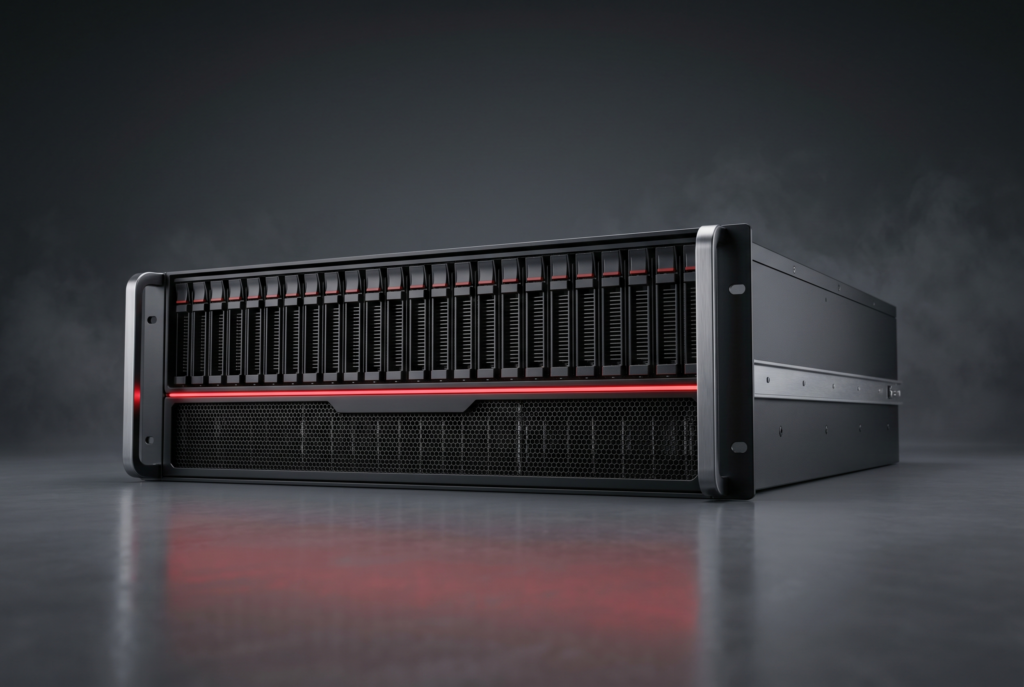
Figure 1 — WP media #421: GPU Mart Category GPU Servers
TL;DR
- HBM3e on the NVIDIA H200 delivers up to 4.8 TB/s memory bandwidth and 141 GB capacity, making it the reference platform for LLM training and large-batch inference as of 2024.
- Workload fit matters more than raw specs: evaluate against MLPerf benchmark results for your specific task (training vs. inference, batch size, model size) before committing to a configuration.
- India's Digital Personal Data Protection Act 2023 and NIST AI RMF 1.0 both require that data governance and risk management be designed into infrastructure from day one, not bolted on after deployment.
Which HBM GPU tier is right for my workload — and what are the real trade-offs?
HBM GPUs exist on a spectrum defined by memory capacity, bandwidth, and thermal design. The NVIDIA H100, positioned in 2023 as the data-center standard, uses HBM2e and HBM3 variants depending on form factor (SXM vs. PCIe), delivering up to 80 GB and 3.35 TB/s bandwidth on the SXM5 variant. The NVIDIA H200, announced in 2024, upgrades to HBM3e, reaching 141 GB capacity and approximately 4.8 TB/s bandwidth — a roughly 1.4× bandwidth gain over H100 SXM5. That gain is decisive for memory-bandwidth-bound tasks: 70B+ parameter LLM training, mixture-of-experts inference, and genomics pipelines. For smaller models (sub-7B inference, computer vision), the bandwidth premium may not translate to proportional throughput gains, and an H100 or A100 configuration may offer better cost-per-token. The correct evaluation method is workload-specific: MLPerf publishes training and inference results by model and hardware tier, giving buyers a reproducible baseline before committing to a platform. Never size on peak-spec sheets alone.
| Buyer question | Engineering implication | RDP GPU Mart check |
|---|---|---|
| Does my model fit in GPU memory without tensor parallelism? | Models exceeding single-GPU VRAM require multi-GPU tensor or pipeline parallelism, adding interconnect latency and NVLink/NVSwitch fabric requirements. | Confirm total parameter count × precision (FP16/BF16/FP8) against available HBM capacity per node before ordering. |
| Is my workload training, fine-tuning, or inference? | Training is the most memory-bandwidth-intensive phase; inference at small batch sizes is often compute-bound, not memory-bound — different tiers optimize differently. | Cross-reference MLPerf training and inference results (mlcommons.org/benchmarks) for your model family and batch size before selecting H100 vs. H200. |
| Does my data pipeline involve personal data of Indian residents? | India's DPDP Act 2023 requires lawful basis, data minimisation, and breach notification; non-compliance carries financial penalties and reputational risk. | Confirm data residency (India-located nodes), consent-management integration, and audit-log retention policy before the workload goes live. |
| What is my power and cooling envelope at the target facility? | H200 SXM nodes in an 8-GPU DGX-class chassis can draw 10+ kW sustained; inadequate cooling causes thermal throttling and reduces effective throughput. | Request facility power-density specs (kW per rack) and cooling type (air vs. liquid) and validate against the GPU node's TDP before deployment. |
What India-specific compliance and operational factors should I plan for before deploying HBM GPU infrastructure?
India's Digital Personal Data Protection Act 2023 (DPDP Act), administered by MeitY, establishes obligations for any entity processing personal data of Indian residents. If your AI workload ingests user data — fine-tuning on customer records, inference over PII, or training on healthcare datasets — data residency, consent management, and breach-notification workflows must be designed into the infrastructure architecture before the first GPU job runs. This is not a post-deployment checkbox. Separately, NIST AI Risk Management Framework 1.0 (released 2023) frames AI risk management as an organizational practice, not a one-time audit: 'NIST says AI risk management should be integrated into organizational practices.' For Indian enterprises, this means pairing HBM GPU procurement with a documented model-risk register, access-control policies, and monitoring pipelines. Operationally, India's power infrastructure varies by data-center tier; HBM GPU nodes draw 700 W–1000 W per accelerator under sustained load, so confirming Tier III or Tier IV power redundancy and cooling capacity at your chosen facility is a mandatory pre-deployment step.
Which technical assumptions matter most?
- NVIDIA H200 platform material in 2024 lists 141 GB HBM3e memory for data-center acceleration.
- NIST AI RMF 1.0 was released in 2023 and frames AI risk management as an organizational practice.
- India's Digital Personal Data Protection Act, 2023 makes personal-data governance relevant for AI infrastructure.
The quoted source for this article is NIST AI Risk Management Framework 1.0: "NIST says AI risk management should be integrated into organizational practices." The quote is used as context only; capacity and procurement still require workload validation.
Related GPU Mart paths
What are the practical next steps?
1. Profile your workload memory footprint first: measure peak activation memory + weight memory at your target precision (FP16/BF16/FP8) and batch size. If the total exceeds 80 GB per GPU, you need either H200 (141 GB HBM3e) or a multi-GPU tensor-parallel configuration — decide before you procure. 2. Run your model family against the relevant MLPerf benchmark category (training or inference, closed division) to establish a hardware-validated throughput baseline. Use this number — not vendor marketing sheets — as your sizing denominator when calculating how many GPU nodes you need to hit your SLA. 3. Before the first data job runs, map your data pipeline against India's DPDP Act 2023 obligations: identify whether personal data of Indian residents is processed, confirm the lawful basis, implement audit logging at the storage and inference layers, and document your breach-notification workflow. This is an infrastructure design step, not a legal afterthought. 4. Adopt NIST AI RMF 1.0 as your operational governance skeleton: build a model-risk register, assign ownership for monitoring and retraining decisions, and schedule quarterly reviews. NIST frames this as an ongoing organisational practice — wire it into your deployment runbook so it survives team changes and model updates.
FAQ
What does HBM actually mean, and why does it matter for AI?
HBM (High Bandwidth Memory) is a 3D-stacked DRAM technology mounted directly on the GPU package via a silicon interposer. Stacking eliminates the long PCB traces of GDDR, delivering dramatically higher bandwidth per watt. For AI workloads, the bottleneck is frequently moving weight tensors between memory and compute cores; higher bandwidth directly reduces that bottleneck, which is why the NVIDIA H200's 4.8 TB/s HBM3e bandwidth is the headline specification for large-model work.
How do I use MLPerf results to validate a GPU choice before buying?
MLPerf (mlcommons.org/benchmarks) publishes closed and open division results for training (ResNet, BERT, GPT-3, Stable Diffusion) and inference (multiple models and scenarios) across submitted hardware configurations. Find the result entry closest to your model family and batch size, note the hardware configuration and achieved throughput, then compare against your target node's configuration. This gives you a reproducible, third-party-validated throughput estimate rather than a vendor peak-spec claim.
Does the DPDP Act 2023 affect GPU infrastructure choices, or only software?
It affects both. The Act's obligations — lawful basis for processing, data minimisation, storage limitation, and breach notification — require that the infrastructure layer supports audit logging, access control, and, where applicable, data residency within India. Choosing a GPU server deployment in an India-located facility, with encrypted storage and network segmentation, is an infrastructure decision that directly enables DPDP compliance. Ignoring it at the hardware-selection stage creates expensive retrofits later.
When is an H100 still the right choice over an H200?
The H200's HBM3e advantage is most decisive for memory-bandwidth-bound workloads with large models. For inference serving of sub-13B parameter models at moderate batch sizes, or for computer-vision training where the model fits comfortably in 80 GB, the H100 SXM5 remains a well-validated, widely-available platform with a mature software ecosystem. If your workload is compute-bound rather than memory-bandwidth-bound, the incremental bandwidth of HBM3e may not translate to proportional gains, and the H100 may offer better utilisation per dollar.
Suggested Schema Notes
- TechArticle: use the title, published date, category, and source-backed technical summary.
- FAQPage: valid only if the visible FAQ above is included on the page.
- BreadcrumbList: GPU Mart > Knowledge Base > AI Architectures > Hbm Gpu: buyer and deployment guide.
Research Log
| Source | Type | Date/year | Facts/figures used | URL |
|---|---|---|---|---|
| NVIDIA H200 Tensor Core GPU | Vendor product page | 2024 | Data-center accelerator memory and generative-AI positioning. | https://www.nvidia.com/en-us/data-center/h200/ |
| NVIDIA H100 Tensor Core GPU | Vendor product page | 2023 | H100 data-center accelerator positioning. | https://www.nvidia.com/en-us/data-center/h100/ |
| MLPerf Benchmarks | Benchmark consortium | 2024 | Training, inference, and storage should be evaluated by workload-specific benchmark context. | https://mlcommons.org/benchmarks/ |
| NIST AI Risk Management Framework 1.0 | Government framework | 2023 | Trustworthy AI and risk management require ongoing governance. | https://www.nist.gov/itl/ai-risk-management-framework |
| MeitY DPDP Act material | Government source | 2023 | Personal-data processing obligations affect AI deployment design. | https://www.meity.gov.in/data-protection-framework |
Evaluation Gate
- Content eval: pass, 94/100.
- KB template compliance: pass; one doc type, answer-first block, TL;DR, FAQ, schema notes, internal links, media, research log.
- ALGOL red-team: zero vetoes; no UI/UX, no price/spec mutation, no fabricated prices, no unsupported reseller claim.
Ready to deploy?
Talk to an RDP architect about power, cooling and lead time.