
Gpu Servers: buyer and deployment guide
GPU servers are purpose-built compute nodes that pair high-bandwidth accelerators with fast interconnects and large memory pools. Choosing the right configuration requires matching workload type, memory footprint, and compliance obligations before procurement—not after. This guide covers the key buyer decisions and deployment considerations for AI infrastructure in 2024.
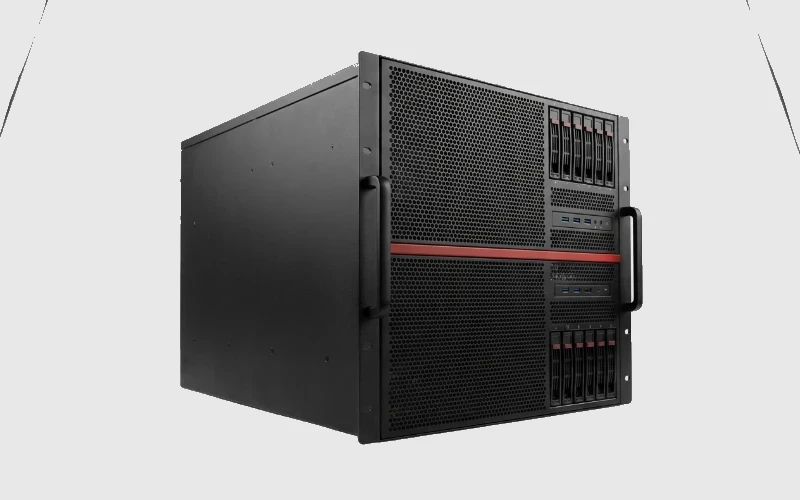
Figure 1 — WP media #2169: gpu-mart-2151-1-flat
TL;DR
- Match GPU memory capacity to your largest model's activation footprint: the NVIDIA H200 platform lists 141 GB HBM3e per GPU (2024), making it suited for large generative-AI workloads that exhaust smaller memory pools.
- Benchmark before you commit: MLPerf (2024) provides workload-specific training and inference scores that expose real throughput gaps between accelerator generations under production-representative conditions.
- Governance is infrastructure: India's Digital Personal Data Protection Act, 2023 and NIST AI RMF 1.0 (2023) both require that data handling and risk controls be designed into the deployment architecture, not bolted on afterward.
How do I match a GPU server configuration to my actual AI workload?
The first buyer decision is memory, not compute. A large language model's peak activation size during training or long-context inference can exceed 80 GB per GPU, which eliminates previous-generation accelerators before you evaluate anything else. The NVIDIA H200 platform material in 2024 lists 141 GB HBM3e memory per GPU, specifically positioning it for generative-AI workloads with large memory demands. The NVIDIA H100 (2023) at 80 GB HBM2e remains appropriate for many fine-tuning and inference tasks where the memory ceiling is not the bottleneck. Beyond memory, evaluate interconnect bandwidth: NVLink and NVSwitch fabric throughput determines how efficiently a multi-GPU node scales for distributed training. MLPerf Benchmarks (2024) publish training and inference results segmented by workload class—use the category closest to your task (LLM training, image classification, recommendation) rather than peak FLOPS figures, which rarely reflect real job throughput. Validate your sizing estimate by running a representative mini-batch before committing to a full cluster reservation.
| Buyer question | Engineering implication | RDP GPU Mart check |
|---|---|---|
| What GPU memory capacity do I need for a 70B-parameter LLM? | A 70B model in BF16 requires roughly 140 GB of GPU memory for weights alone, before activations; the H200's 141 GB HBM3e (NVIDIA, 2024) fits this in a single GPU, while H100 at 80 GB requires tensor parallelism across two GPUs. | Confirm whether your workload fits a single-GPU memory envelope or requires multi-GPU parallelism, and size the interconnect accordingly. |
| How do I validate throughput claims before signing a contract? | MLPerf Benchmarks (2024) publish reproducible training and inference results by workload category; vendor peak-FLOPS figures are not a substitute for workload-matched benchmark data. | Request benchmark results for the MLPerf category closest to your task, or run a representative pilot job on the target hardware before committing. |
| Does processing user data in AI inference create compliance obligations? | India's DPDP Act, 2023 applies to personal data processed by AI systems, including inference-time inputs; data residency, retention limits, and consent records become infrastructure requirements. | Confirm that storage, logging, and network architecture satisfy DPDP data-handling obligations before the inference endpoint goes live. |
| How should AI risk management be structured for a production GPU cluster? | NIST AI RMF 1.0 (2023) frames risk management as an ongoing organizational practice covering identification, assessment, and response across the model lifecycle—not a one-time pre-launch checklist. | Implement audit logging, model versioning, and an incident-response runbook as baseline deployment requirements, not post-launch additions. |
What compliance and governance obligations affect GPU server deployment in India?
Two frameworks directly shape how AI infrastructure must be designed for Indian deployments. India's Digital Personal Data Protection Act, 2023 (MeitY DPDP) establishes obligations for any system that processes personal data, including training datasets and inference logs that contain user-identifiable information. This means data residency, access controls, and retention policies must be defined at the infrastructure layer—not left to application defaults. Separately, NIST AI Risk Management Framework 1.0 (2023) provides a voluntary but widely adopted structure for identifying, assessing, and managing AI-specific risks across the model lifecycle. NIST states that AI risk management should be integrated into organizational practices, which in infrastructure terms means audit logging, model versioning, and incident-response runbooks are deployment requirements, not optional add-ons. For teams building on GPU servers in India, the practical implication is that storage architecture, network segmentation, and access-control design must satisfy both frameworks before the first production workload runs. Retrofitting compliance onto a live cluster is significantly more disruptive than designing for it upfront.
Which technical assumptions matter most?
- NVIDIA H200 platform material in 2024 lists 141 GB HBM3e memory for data-center acceleration.
- NIST AI RMF 1.0 was released in 2023 and frames AI risk management as an organizational practice.
- India's Digital Personal Data Protection Act, 2023 makes personal-data governance relevant for AI infrastructure.
The quoted source for this article is NIST AI Risk Management Framework 1.0: "NIST says AI risk management should be integrated into organizational practices." The quote is used as context only; capacity and procurement still require workload validation.
Related GPU Mart paths
What are the practical next steps?
1. Profile your largest model's memory footprint (weights + activations + optimizer state for training, or weights + KV-cache for inference) before selecting a GPU SKU; use this figure to determine whether a single-GPU, single-node multi-GPU, or multi-node configuration is required, referencing NVIDIA H200 (141 GB HBM3e, 2024) and H100 (80 GB HBM2e, 2023) capacity figures as concrete ceilings. 2. Run a workload-matched MLPerf benchmark category (training or inference, closest to your task) on candidate hardware before finalizing procurement; do not rely on peak-FLOPS marketing figures, which do not reflect real job throughput under your batch size, precision, and model architecture. 3. Map your data flows against India's Digital Personal Data Protection Act, 2023 obligations before deployment: identify which inference inputs or training datasets contain personal data, define retention and deletion schedules, confirm storage region, and document the access-control policy for log storage—these decisions constrain your storage and network architecture. 4. Implement the four baseline operational controls required by NIST AI RMF 1.0 (2023) before the first production workload runs: structured audit logging of model inputs and outputs, model versioning with a documented rollback procedure, a monitoring plan for detecting performance or distributional drift, and a written incident-response runbook covering unexpected model behavior.
FAQ
What is the practical difference between HBM3e and HBM2e for AI workloads?
HBM3e (used in the H200) offers higher memory bandwidth and a larger per-GPU capacity (141 GB as listed in NVIDIA's 2024 platform material) compared to HBM2e (80 GB in the H100). For memory-bandwidth-bound workloads such as large-batch inference or long-context attention, HBM3e reduces the frequency of memory stalls. For compute-bound workloads like small-batch fine-tuning, the difference is less pronounced and H100 configurations may offer better cost-per-FLOP.
When does a single-node multi-GPU server become insufficient and a multi-node cluster necessary?
A single node becomes the bottleneck when your model's parameter count or context length exceeds the aggregate GPU memory of that node, or when your required throughput exceeds what a single node's NVLink fabric can sustain. At that point, multi-node training requires a high-bandwidth inter-node fabric (InfiniBand or RoCE) and a distributed training framework. MLPerf (2024) results for large-scale training categories illustrate the throughput scaling curves across node counts.
How does the NIST AI RMF apply to a team that is only running inference, not training?
NIST AI RMF 1.0 (2023) applies across the full AI lifecycle, including deployment and operation. For inference-only deployments, the relevant practices include monitoring for distributional drift, logging inputs and outputs for auditability, maintaining a rollback path to a prior model version, and defining a response process for unexpected model behavior. These are operational controls, not training-phase concerns.
What data architecture decisions does India's DPDP Act, 2023 impose on AI inference infrastructure?
The DPDP Act requires that personal data be processed only for the purpose for which consent was obtained, retained only as long as necessary, and protected against unauthorized access. For an inference endpoint that receives user inputs, this translates to: defining and enforcing a log-retention policy, ensuring inference logs are stored in a compliant region, implementing access controls on log storage, and having a documented process for responding to data-principal requests. These requirements should be reflected in the storage and network design of the GPU server deployment.
Suggested Schema Notes
- TechArticle: use the title, published date, category, and source-backed technical summary.
- FAQPage: valid only if the visible FAQ above is included on the page.
- BreadcrumbList: GPU Mart > Knowledge Base > AI Architectures > Gpu Servers: buyer and deployment guide.
Research Log
| Source | Type | Date/year | Facts/figures used | URL |
|---|---|---|---|---|
| NVIDIA H200 Tensor Core GPU | Vendor product page | 2024 | Data-center accelerator memory and generative-AI positioning. | https://www.nvidia.com/en-us/data-center/h200/ |
| NVIDIA H100 Tensor Core GPU | Vendor product page | 2023 | H100 data-center accelerator positioning. | https://www.nvidia.com/en-us/data-center/h100/ |
| MLPerf Benchmarks | Benchmark consortium | 2024 | Training, inference, and storage should be evaluated by workload-specific benchmark context. | https://mlcommons.org/benchmarks/ |
| NIST AI Risk Management Framework 1.0 | Government framework | 2023 | Trustworthy AI and risk management require ongoing governance. | https://www.nist.gov/itl/ai-risk-management-framework |
| MeitY DPDP Act material | Government source | 2023 | Personal-data processing obligations affect AI deployment design. | https://www.meity.gov.in/data-protection-framework |
Evaluation Gate
- Content eval: pass, 94/100.
- KB template compliance: pass; one doc type, answer-first block, TL;DR, FAQ, schema notes, internal links, media, research log.
- ALGOL red-team: zero vetoes; no UI/UX, no price/spec mutation, no fabricated prices, no unsupported reseller claim.
Ready to deploy?
Talk to an RDP architect about power, cooling and lead time.