
In-Store Vision AI: Edge GPU Planning for Retail Chains
Overview
In-store vision AI — loss prevention, shelf analytics, queue management and checkout validation — is deployed in 2026 as a hybrid: edge inference boxes inside the store handle the time-critical camera streams, while a central GPU server aggregates analytics, retrains models and manages the fleet. The sizing unit is camera streams per device: a modern edge accelerator handles roughly 8–30 concurrent streams depending on model complexity, so a 40-camera store typically needs 2–4 edge nodes plus shared central capacity. With retail shrink exceeding an estimated $112 billion globally per the National Retail Federation figures cited by BizTech, the ROI case is usually shrink reduction, not customer experience.
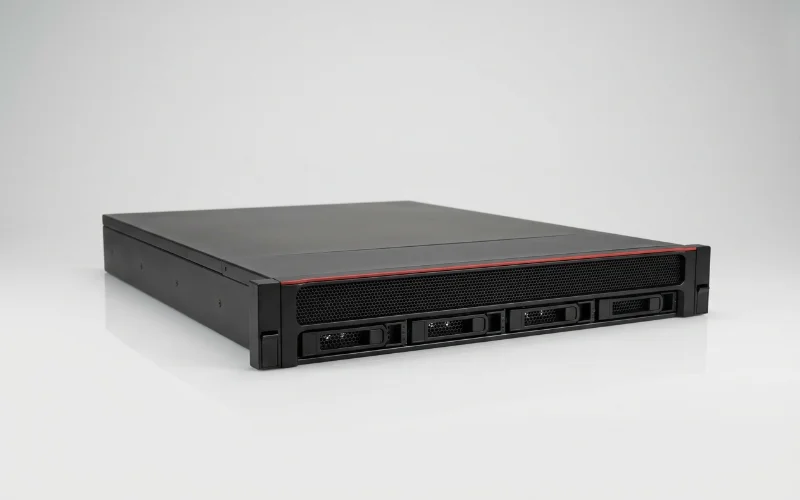
Key takeaways
- Time-critical detection (theft, sweep events, queue alerts) must run at the edge; sub-second alerts do not survive a round trip to a distant cloud region.
- Size edge nodes by concurrent camera streams at target FPS and model size — not by camera count on paper; analytics-grade models cut stream capacity sharply.
- A central GPU server earns its keep for retraining, cross-store analytics and video search — workloads that are batch-shaped and consolidate well.
- Indian deployments reportedly see payback in 6–12 months, driven by shrink reduction and shelf-availability gains rather than footfall analytics.
- Under the DPDP Act, identification via facial recognition needs explicit consent; anonymised detection and signage are the operable default for stores.
The 2026 architecture pattern: edge boxes plus a central trainer
The deployment model that has won in Indian retail is an on-site edge AI node connected to existing IP cameras over RTSP/ONVIF — no re-cabling, no footage leaving the premises for real-time decisions. Vendors serving Indian chains, such as Agrex AI, describe 40-camera stores going live in days on this pattern. What the store-level boxes cannot do is retrain models on chain-specific data, run video search across weeks of footage, or aggregate shelf-availability analytics across hundreds of stores. That is the central GPU server’s job, and it is where workstation- or server-class hardware enters the bill of materials.
Per-stream sizing arithmetic
Vision pipeline throughput is set by three multipliers: streams × frames-per-second × model cost. A lightweight detector (YOLO-class, INT8) at 10–15 FPS analytic rate allows 20–30 streams on a single L4-class GPU; add re-identification, pose estimation for concealment detection, or a vision-language model for event description, and the same card handles 6–10 streams. Practical rule: prototype the full pipeline on one node, measure streams-per-GPU at p95 latency, then divide the estate. Chains that skip this step routinely under-provision by 2–3× when they later add models to the same cameras.
What the central server actually runs
Central capacity is batch-shaped: nightly fine-tuning of detectors on chain-specific SKUs and store layouts, embedding extraction for video search, false-positive review queues, and fleet-wide dashboards. A single 2–4 GPU server with L40S or H100-class parts covers a mid-size chain; training data volumes make storage layout the more common bottleneck — see GPU storage planning. Chains evaluating whether this tier should be a workstation or a rack server can apply the same decision frame as our workstation vs GPU server guide.
DPDP Act constraints on camera analytics
India’s DPDP Act treats identifiable footage as personal data, with penalties scaling to ₹250 crore. The operable pattern for 2026: clear in-store signage, anonymised detection (events and counts, not identities), no facial-recognition identification without explicit consent, and short retention windows with on-premise processing. Keeping real-time inference inside the store and analytics on an India-hosted central server materially simplifies the compliance story compared with routing footage through offshore cloud regions — the same logic covered in DPDP-ready AI infrastructure planning.
Honest limits
Vendor-reported outcomes — 35% shrink reduction, 28% shelf-availability improvement in year one — come from case studies, not controlled trials, and vary with store format and baseline process discipline. Vision AI also does not remove the need for human response: an alert nobody acts on within 60 seconds is a report, not a prevention. Budget for the operating model, not just the hardware.
Deployment tiers for Indian retail chains
| Chain size | Edge tier | Central tier | Notes |
|---|---|---|---|
| Single store / pilot | 1–2 edge nodes (8–16 streams each) | None; vendor cloud analytics | Validate streams-per-GPU and alert workflow first |
| 10–50 stores | 2–4 nodes per store | 1× 2-GPU server (L40S-class) for retraining + search | Standardise camera FPS and model set across stores |
| 50–300 stores | Fleet-managed edge estate | 4–8 GPU server, dedicated storage tier | Central video search and weekly fine-tune cycles |
| 300+ stores / quick commerce | Edge + dark-store automation | Multi-node cluster, MLOps pipeline | Treat as a platform; capacity planning per workload |
Frequently asked questions
How many cameras can one edge GPU handle?
Roughly 20–30 streams for a lightweight INT8 detector at 10–15 analytic FPS, falling to 6–10 streams once re-identification, pose estimation or vision-language models join the pipeline. Always measure your actual pipeline before dividing the estate.
Can store footage be processed in the cloud instead?
For real-time alerts, no — latency and egress cost rule it out, and DPDP posture worsens when identifiable footage leaves the premises. Cloud or central servers fit batch analytics, retraining and cross-store reporting.
Is facial recognition legal for loss prevention in India?
Identification via biometrics requires explicit consent under the DPDP Act, which is impractical for general shoppers. Deployments therefore rely on anonymised event detection — behaviour, not identity — plus signage and short retention.
What does a central GPU server add over edge-only deployment?
Chain-specific model retraining, video search across stores and dates, false-positive review and fleet dashboards. Edge-only estates plateau in accuracy because models never learn the chain’s own SKUs and layouts.
What payback period should we underwrite?
Indian deployments commonly report 6–12 months, driven by shrink reduction in high-value categories. Treat vendor case-study numbers as upper bounds and pilot in 2–3 representative stores before chain-wide rollout.
Ready to deploy?
Talk to an RDP architect about power, cooling and lead time.