
Ambient Clinical AI Scribes: On-Prem GPU Planning for Indian Hospitals
Overview
Ambient clinical documentation — AI that listens to consultations and drafts the note — is the fastest-adopted clinical AI category globally, with roughly a third of providers having access by early 2026 and large systems (including the US VA) rolling it out network-wide. For Indian hospitals the imported playbook breaks in three places: published research finds speech-recognition word error rates rising to 15–25% on non-Western accents and code-switching (Hinglish consultations are the norm, not the edge case), always-on cloud assumptions fail on hospital connectivity, and patient audio is squarely DPDP-scoped personal data. The workable Indian pattern is on-premise or in-country hosting of the full pipeline — speech-to-text, extraction, note generation — which is a modest GPU deployment this article sizes.
Key takeaways
- An ambient scribe is three GPU workloads: streaming ASR, clinical entity extraction, and LLM note drafting — each sized differently.
- Indian deployments must be validated on code-switched, accented speech; Western WER benchmarks do not transfer, and fine-tuning on local audio is often the difference between usable and not.
- A single L40S/H100-class inference server handles the scribe load of a large hospital’s OPD; per-consultation compute is modest because audio is low-bandwidth.
- Patient audio and notes are DPDP personal data with health sensitivity — on-prem or Indian-hosted processing with short audio retention is the defensible posture.
- LLM extraction hallucination (reported 5–15% in unadapted systems) makes clinician review non-negotiable; the scribe drafts, the doctor signs.
Inside the pipeline: three models, three signatures
Stage one, streaming ASR: a Whisper-class or successor model transcribing consultation audio in near-real time — compute-light per stream (fractions of a GPU), scaling with concurrent consultations. Stage two, clinical NLP: entity extraction, medication/dosage recognition, problem-list mapping — small specialised models, often the accuracy bottleneck. Stage three, note generation: a 7–70B-class LLM structuring the encounter into the hospital’s note format (SOAP or local variants), the largest single GPU consumer but invoked once per consultation rather than continuously. The pipeline’s aggregate demand is concurrency-driven: 50 simultaneous OPD consultations is a few dozen ASR streams plus a queue of note-generation jobs — comfortably a one-to-two GPU problem with batching.
The Indian language reality
Peer-reviewed evaluations are blunt: scribes tuned on Western English degrade sharply on Indian consultations — accents, Hindi-English code-switching, regional languages, and documentation conventions all differ, with extraction hallucination rates of 5–15% reported in unadapted systems. Two consequences for buyers. Procurement: demand vendor evidence on Indian audio — a WER figure on your own recorded (consented) sample set, not a global benchmark. Infrastructure: plan for fine-tuning — adapting ASR and extraction models on local audio is a periodic batch workload that fits a single 96 GB-class card or a small server, per the memory math in our LoRA/QLoRA guide, and it is where most of the deployed-quality gains live.
Sizing the serving tier
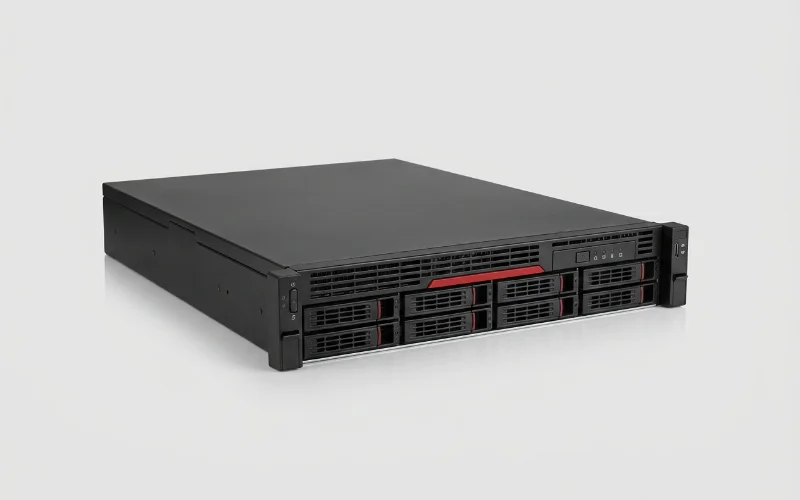
Work from concurrent consultations: each active room needs an ASR stream (~0.05–0.2 GPU depending on model size) and generates one note job (~5–20 seconds of LLM time on a batched 8–13B model). A 200-doctor OPD running 60–80 concurrent consultations lands around one to two L40S-class GPUs for ASR plus one H100/L40S-class card for generation and extraction — a single 2–4 GPU server with headroom, following the concurrency arithmetic in the inference sizing checklist. Latency SLOs are forgiving (notes are reviewed after the consultation), which allows aggressive batching; the hard requirement is availability during OPD hours and graceful queueing at peak. Small clinics invert the design: a single workstation-class box runs the whole pipeline for a handful of rooms.
Governance: DPDP and the signing clinician
Consultation audio is personal data of both patient and clinician, with health data sensitivity and consent obligations under the DPDP Act — penalties scale to ₹250 crore. The defensible architecture: explicit consent capture in the consultation workflow, on-prem or Indian-hosted processing, audio deleted or heavily access-restricted after note finalisation (retain the note, not the recording, unless policy requires otherwise), audit logs of every access, and no vendor telemetry carrying transcript fragments offshore — the same contractual discipline as DPDP-ready infrastructure planning. Clinically: the LLM drafts, the clinician edits and signs, and the system tracks edit distance as a live quality metric — rising edit rates are the early warning that models need re-tuning.
Deployment tiers
| Setting | Concurrent consultations | Hardware | Notes |
|---|---|---|---|
| Clinic / small hospital | 2–10 | 1 workstation-class box (48–96 GB GPU) | Whole pipeline on one machine |
| Large hospital OPD | 40–80 | 2–4 GPU server (L40S/H100-class) | Batched generation, HA within OPD hours |
| Hospital chain (hub model) | Hundreds across sites | Central 4–8 GPU node + per-site fallback | Bandwidth + resilience planning per site |
| Fine-tuning (any tier) | Batch, periodic | Shares serving hardware off-peak or one 96 GB card | Local-audio adaptation is the quality lever |
Frequently asked questions
Can ambient scribes run fully on-premise?
Yes — ASR, extraction and note-generation models all deploy on local GPUs, and for Indian hospitals this is the posture that satisfies DPDP and connectivity reality. The trade-off is owning model updates and fine-tuning, which vendors increasingly support on-prem.
How much GPU does one consultation cost?
Little: a streaming ASR slice during the encounter and 5–20 seconds of batched LLM time for the note. Concurrency, not per-encounter cost, drives sizing — count simultaneous consultations at peak OPD.
What accuracy should we demand before rollout?
Vendor WER on your own consented audio sample — not global benchmarks — plus a piloted clinician edit-rate. Published data shows 15–25% WER on unadapted Indian speech; local fine-tuning should bring transcription into single digits before scale-up.
Does the doctor still write the note?
The doctor reviews, edits and signs; the system drafts. Reported extraction hallucination rates of 5–15% in unadapted systems make unreviewed auto-notes clinically and legally indefensible. Track edit distance as the ongoing quality metric.
How long should consultation audio be retained?
The minimising posture: delete or restrict audio once the note is signed, retaining the structured note as the record. Longer retention needs explicit policy justification, consent coverage and access audit — every stored recording is DPDP liability.
Ready to deploy?
Talk to an RDP architect about power, cooling and lead time.