
Shop-Floor Copilots: On-Prem RAG for Maintenance and SOP Knowledge
Overview
The industrial copilot — a natural-language assistant that answers “what is the torque setting for bolt B?” or “how do I clear error 402?” from a plant’s own SOPs, manuals and maintenance history — is manufacturing’s fastest-spreading GenAI use case in 2026, with vendor ecosystems from Siemens’ Industrial Copilot to Tulip and ABB integrations normalising the pattern. Under the hood it is a domain RAG system with hard requirements the office version doesn’t have: multilingual voice on a noisy floor, resilience to plant-network isolation, and source data (maintenance logs) that is jargon-dense and inconsistently written. A single 2–4 GPU on-prem server covers most plants; the hard work is the data pipeline. This article sizes both.
Key takeaways
- An industrial copilot is domain RAG: retrieval over SOPs, manuals, drawings and maintenance history, with an 8–32B-class LLM composing grounded answers.
- Garbage-in dominates: raw maintenance logs are abbreviation-riddled; a cleanup-and-dictionary pipeline (itself an LLM batch job) is the main quality lever.
- Floor reality shapes the stack: hands-free voice (ASR on-server), Hindi/regional-language support, and per-plant serving that survives WAN outages.
- One 2–4 GPU server per plant — or a hub with plant-level fallback — covers hundreds of workers’ query traffic comfortably.
- The copilot’s quiet payoff is tribal-knowledge capture: retiring technicians’ fixes become searchable instead of leaving with them.
Architecture: RAG with an industrial accent
The core follows the enterprise RAG recipe — hybrid retrieval, reranking, grounded generation with citations — over a corpus of SOPs, OEM manuals, P&IDs, quality procedures and the maintenance ledger, per the patterns in our RAG reference architecture. Two industrial extensions matter. Structured-data tools: torque tables, spare-part codes and error-code matrices answer better through direct lookup functions than through chunk retrieval — give the model tools, not just documents. And visual grounding: technicians photograph nameplates and defects; a compact vision-language model on the same server turns images into queries. Answer citations back to the source paragraph are non-negotiable — a confident wrong torque value is a safety incident, not a UX bug.
The data pipeline is the product
Research and practitioner reports agree on the failure mode: LLMs exposed to raw maintenance exports — jargon, abbreviations, inconsistent notation — hallucinate. The remedy is a preprocessing pipeline: normalise ERP/CMMS exports into clean tables, build a plant-specific technical dictionary (abbreviations, machine aliases, local slang), and extract problem→cause→fix triples with LLM prompting before anything is indexed. This is a batch GPU workload — days of small-model inference over years of records — that reuses the serving hardware off-peak, and it repays itself twice: better copilot answers now, and a structured failure-knowledge base that outlives any single tool. Budget it as half the project, because it is.
Floor requirements the office version skips
Voice first: gloved hands and noisy lines make typing marginal — on-server ASR (Whisper-class, noise-robust, validated on Indian-accented and code-switched speech, per the same evidence standards as our clinical scribe article) plus TTS turns the copilot hands-free. Multilingual: the workforce reads Hindi and regional languages more comfortably than English manuals — open multilingual models and translated snippets are a requirement, not a roadmap item. Resilience: plants run when WANs don’t; per-plant serving (or at least a cached fallback tier) keeps the copilot alive through outages, which is also the OT-security posture — plant networks are segmented, and an on-prem copilot respects that boundary where a SaaS endpoint fights it.
Sizing and rollout
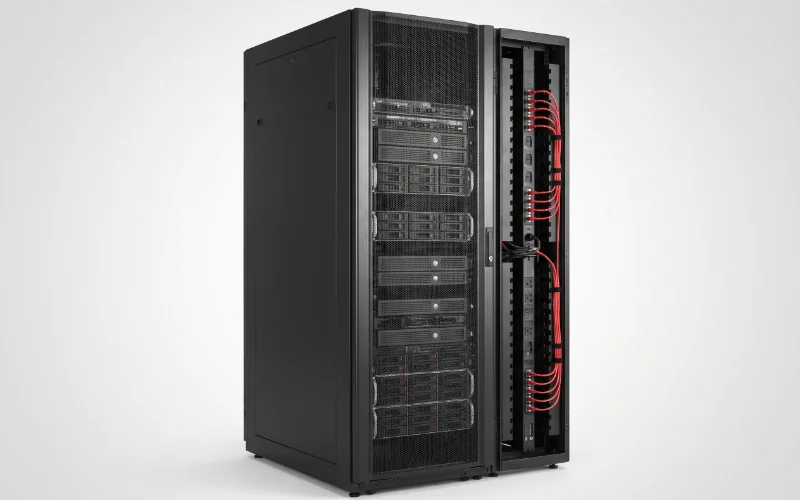
Query traffic is human-paced and bursty: a 500-worker plant generates tens of concurrent sessions at shift change, trivial for a batched 8–13B model plus embedding/rerank/ASR models on a 2–4 GPU (L40S-class) server — the same consolidation profile as the air-cooled enterprise server class. Multi-plant groups choose hub-and-spoke: a central server for the shared corpus and heavy batch jobs, thin per-plant nodes for latency and outage resilience. Rollout sequencing that works: start with one high-value crew (maintenance), index their documents plus two years of cleaned logs, measure deflected escalations and mean-time-to-repair, then widen. Plants that skip the measurement step end up with a demo, not a tool.
Deployment tiers
| Setting | Hardware | Serves | Notes |
|---|---|---|---|
| Single plant, maintenance crew | 1× workstation-class box (48–96 GB GPU) | 50–100 users | Pilot tier; voice + RAG + dictionary pipeline |
| Full plant | 2–4 GPU server | 300–1,000 workers | ASR + LLM + VLM consolidated, shift-change peaks |
| Multi-plant group | Central 4–8 GPU hub + plant fallback nodes | Group-wide | Shared corpus, per-plant resilience |
| Log-cleanup batch (any tier) | Off-peak on serving hardware | — | The quality lever; rerun quarterly |
Frequently asked questions
Does a shop-floor copilot need its own GPU server?
Per plant, usually yes — for latency, WAN-outage resilience and OT-network segmentation. The hardware is modest: a 2–4 GPU server carries a full plant’s conversational, voice and vision traffic.
What makes industrial copilots hallucinate?
Dirty source data — abbreviation-dense logs and inconsistent SOPs — plus missing structured lookups. The fixes are a cleanup-and-dictionary pipeline before indexing, tool-based lookup for numeric values, and mandatory source citations in every answer.
Which languages must an Indian deployment support?
The floor’s actual languages — typically Hindi plus the plant state’s language alongside English — for both queries and answers, with voice in the same set. Open multilingual models make this feasible on-prem without per-query translation APIs.
How do we measure whether it works?
Instrument from day one: escalations deflected, mean-time-to-repair on assisted versus unassisted jobs, answer-citation click-through, and thumbs-down rates per document. MTTR movement on the pilot crew is the number that unlocks wider rollout.
Can the copilot act on machines, not just answer?
Emerging and gated: read-only integration (status, history) is safe early value; write actions (parameter changes, work-order creation) need human confirmation and OT-security review. Treat autonomous actuation as a 2027+ maturity step, not a launch feature.
Ready to deploy?
Talk to an RDP architect about power, cooling and lead time.