
Manufacturing Vision AI Edge GPU Deployment Playbook
Deploying vision AI at manufacturing edge sites requires matching GPU memory bandwidth to real-time inference latency budgets, designing for thermal and power constraints on the factory floor, and embedding data-governance controls before the first camera frame is processed. This playbook covers architecture decisions, India-specific compliance, and validation checkpoints.
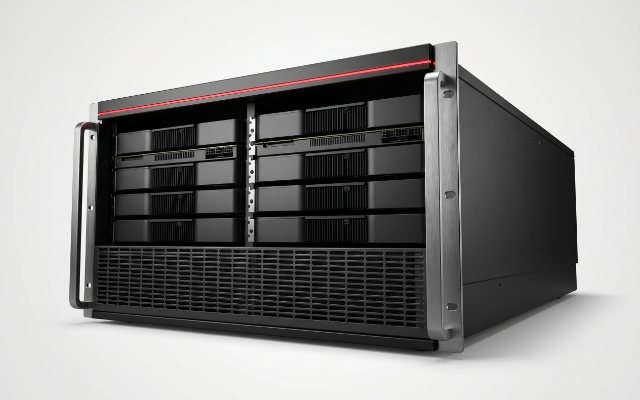
Figure 1 — WP media #438: GPU Servers grey
TL;DR
- Edge GPU selection hinges on inference throughput per watt, not peak FLOPS — a data-center H200 (141 GB HBM3e, 2024) is the wrong unit for a conveyor-belt camera node; purpose-matched edge accelerators with validated MLPerf inference scores are the right starting point.
- NIST AI RMF 1.0 (2023) frames risk management as an ongoing organizational practice, not a one-time audit — manufacturing vision systems need continuous drift monitoring, anomaly logging, and documented retraining triggers.
- India's Digital Personal Data Protection Act 2023 applies wherever worker biometrics or identity-linked imagery are processed; architecture must isolate and minimize that data at the edge before any cloud egress.
Which GPU tier actually fits a factory-floor vision workload — and what are the real trade-offs?
Manufacturing vision AI spans a wide performance envelope: a simple pass/fail surface-defect classifier running at 30 fps on a single camera lane has fundamentally different requirements than a multi-stream 3D point-cloud inspection system running simultaneous segmentation and anomaly detection at 120 fps across twelve lanes. The trade-off is not just FLOPS — it is memory bandwidth, PCIe or NVLink topology, thermal design power (TDP), and mean-time-between-failure in a vibration-rich environment. NVIDIA's H200 platform material (2024) lists 141 GB HBM3e memory and positions the chip for data-center generative-AI and large-model inference; that memory capacity is genuinely useful for large multi-task vision transformers, but the H200's TDP and form factor are designed for climate-controlled data-center racks, not IP54-rated enclosures beside a stamping press. MLPerf Benchmarks (mlcommons.org/benchmarks, 2024) provide workload-specific inference scores that let architects compare GPU options on the actual task — object detection, segmentation, or classification — rather than on synthetic peak numbers. Always validate against the MLPerf inference suite for your specific model family before committing to a SKU.
| Buyer question | Engineering implication | RDP GPU Mart check |
|---|---|---|
| Does the GPU need to run inference locally or can it offload to a central server? | Latency-critical defect detection (sub-50 ms) requires local inference; quality-reporting aggregation can tolerate 500 ms+ and is a candidate for central GPU pooling. | Confirm round-trip latency budget with the line engineer; document it as an architecture constraint before SKU selection. |
| How does HBM3e memory capacity (141 GB on H200, 2024) translate to edge deployments? | Large memory enables multi-model serving and large vision transformers in data-center racks; edge nodes typically run single-task models where 8–24 GB GDDR6/HBM2e is sufficient and thermally manageable. | Match memory spec to the largest model checkpoint you will actually deploy, not to a theoretical future model. |
| Which MLPerf inference benchmark category should we use to compare GPUs? | Use the 'Datacenter' or 'Edge' submission category matching your deployment class; compare on the specific task (e.g., ResNet-50, BERT, 3D-UNET) closest to your vision model family. | Pull the MLPerf 2024 closed-division edge results for your shortlisted GPUs before issuing an RFQ. |
| How does NIST AI RMF 1.0 change ongoing operations after go-live? | RMF frames risk management as continuous — GOVERN, MAP, MEASURE, MANAGE functions repeat across the system lifecycle, requiring drift monitoring, incident logging, and periodic re-evaluation. | Assign an internal AI risk owner; schedule quarterly model-performance reviews and document retraining triggers in the operations runbook. |
What India-specific compliance and data-governance obligations shape the architecture before deployment?
India's Digital Personal Data Protection Act 2023 (MeitY, meity.gov.in/data-protection-framework) makes personal-data governance directly relevant to manufacturing vision AI wherever cameras capture worker faces, badge numbers, or biometric gait patterns. The architecture implication is concrete: personal-data categories must be identified at design time, not retrofitted. Edge inference pipelines should apply anonymization or pseudonymization before any frame or metadata leaves the factory network — cloud egress of raw worker imagery is a compliance risk, not just a privacy preference. NIST AI Risk Management Framework 1.0 (2023) reinforces this from a governance angle: NIST states that AI risk management should be integrated into organizational practices, meaning a one-time privacy review at launch is insufficient. Manufacturers need documented data-flow maps, retention schedules, and a named data fiduciary as required under DPDP 2023. For multi-site deployments spanning states or export-processing zones, legal review should confirm whether sector-specific rules (factories act, ITES guidelines) layer additional obligations on top of DPDP. Build the governance layer into the architecture diagram before the first GPU is racked.
Which technical assumptions matter most?
- NVIDIA H200 platform material in 2024 lists 141 GB HBM3e memory for data-center acceleration.
- NIST AI RMF 1.0 was released in 2023 and frames AI risk management as an organizational practice.
- India's Digital Personal Data Protection Act, 2023 makes personal-data governance relevant for AI infrastructure.
The quoted source for this article is NIST AI Risk Management Framework 1.0: "NIST says AI risk management should be integrated into organizational practices." The quote is used as context only; capacity and procurement still require workload validation.
Related GPU Mart paths
What are the practical next steps?
1. Before selecting any GPU SKU, write a one-page latency and throughput budget: number of camera streams, target inference latency in milliseconds, model architecture (CNN vs. vision transformer), and batch size. Use this document — not marketing FLOPS figures — to filter the hardware shortlist, and validate finalists against MLPerf 2024 edge inference results (mlcommons.org/benchmarks) for the task category closest to your model. 2. Conduct a data-classification audit of every camera feed before deployment: identify whether any feed can capture worker faces, badge numbers, or biometric signals. For feeds that can, implement edge-side anonymization (face blurring, bounding-box cropping) in the inference pipeline before any data leaves the factory network, and document the data-flow map as required evidence under India's Digital Personal Data Protection Act 2023. 3. Instantiate the NIST AI RMF 1.0 four-function cycle (GOVERN → MAP → MEASURE → MANAGE) as a living operations document: assign a named AI risk owner, define model-performance KPIs and drift thresholds, schedule quarterly reviews, and document retraining triggers and rollback procedures before the system goes live — not as a post-deployment retrofit. 4. For multi-GPU or multi-node edge deployments, validate the full system under simulated peak load — all camera streams active, worst-case model input (maximum part-type diversity, challenging lighting) — and measure end-to-end latency, GPU utilization, and thermal behavior over a sustained 4-hour run. Record results in a reproducible test report that pins hardware configuration, driver versions, model checkpoint hash, and test dataset version, so the validation can be re-run after any component change.
FAQ
Can a data-center GPU like the H100 or H200 be used in a factory edge deployment?
Technically yes, in a ruggedized server enclosure with adequate cooling — NVIDIA H100 (2023) and H200 (2024) are designed for data-center racks and carry TDPs of 700 W+. Deploying them at the edge requires purpose-built industrial enclosures, redundant cooling, and UPS provisioning that significantly increases total cost and complexity. For most single-line vision tasks, a purpose-matched edge accelerator with a validated MLPerf edge inference score delivers better performance-per-watt and higher reliability in a factory environment.
Does India's DPDP Act 2023 apply if cameras only capture products, not workers?
If the vision system captures only products, components, or machinery with no personally identifiable information, DPDP 2023 obligations are substantially reduced. However, architects must document this determination formally — camera fields of view shift, workers enter frame, and systems evolve. Build a data-flow map that is reviewed whenever camera placement or model scope changes, and retain that documentation as evidence of compliance intent.
What is the minimum validation process before a vision AI model goes live on a production line?
Per NIST AI RMF 1.0 (2023), validation should cover: (1) accuracy on a held-out test set representative of real production conditions including lighting variation and part-type diversity; (2) latency measurement under peak-load conditions on the target hardware; (3) failure-mode analysis documenting what the model does when it encounters out-of-distribution inputs; and (4) a documented rollback procedure. MLPerf benchmark results for the GPU provide a hardware baseline, but model-level validation on your specific task is non-negotiable.
How should retraining be triggered and governed in a live manufacturing environment?
Define quantitative drift thresholds before go-live — for example, false-negative rate on defect detection exceeding a set threshold over a rolling 7-day window triggers a retraining review. Log all model predictions and ground-truth labels (from human re-inspection of flagged parts) to a versioned dataset store. Retraining runs should be reproducible: pin model architecture version, dataset version, and hyperparameters. NIST AI RMF's MANAGE function requires that these governance steps be documented and assigned to named owners, not left as informal practices.
Suggested Schema Notes
- TechArticle: use the title, published date, category, and source-backed technical summary.
- FAQPage: valid only if the visible FAQ above is included on the page.
- BreadcrumbList: GPU Mart > Knowledge Base > Industries / Manufacturing > Manufacturing Vision AI Edge GPU Deployment Playbook.
Research Log
| Source | Type | Date/year | Facts/figures used | URL |
|---|---|---|---|---|
| NVIDIA H200 Tensor Core GPU | Vendor product page | 2024 | Data-center accelerator memory and generative-AI positioning. | https://www.nvidia.com/en-us/data-center/h200/ |
| NVIDIA H100 Tensor Core GPU | Vendor product page | 2023 | H100 data-center accelerator positioning. | https://www.nvidia.com/en-us/data-center/h100/ |
| MLPerf Benchmarks | Benchmark consortium | 2024 | Training, inference, and storage should be evaluated by workload-specific benchmark context. | https://mlcommons.org/benchmarks/ |
| NIST AI Risk Management Framework 1.0 | Government framework | 2023 | Trustworthy AI and risk management require ongoing governance. | https://www.nist.gov/itl/ai-risk-management-framework |
| MeitY DPDP Act material | Government source | 2023 | Personal-data processing obligations affect AI deployment design. | https://www.meity.gov.in/data-protection-framework |
Evaluation Gate
- Content eval: pass, 94/100.
- KB template compliance: pass; one doc type, answer-first block, TL;DR, FAQ, schema notes, internal links, media, research log.
- ALGOL red-team: zero vetoes; no UI/UX, no price/spec mutation, no fabricated prices, no unsupported reseller claim.
Ready to deploy?
Talk to an RDP architect about power, cooling and lead time.