
On-Prem AI for BFSI: Running Fraud & Risk Models In-House (India)
Indian banks and financial firms increasingly run fraud and risk AI on their own GPU infrastructure — because RBI data-localization, the DPDP Act, and PCI-DSS require transaction data to stay on Indian soil, and because real-time fraud detection needs sub-millisecond inference on millions of daily UPI, NEFT, RTGS, and card transactions. With reported frauds hitting ₹48,021 crore in FY26 (up 46.4%) and deepfake KYC attacks rising, in-house GPU inference has become a control requirement, not an option.
TL;DR — for BFSI CIOs / CROs
- Regulation drives on-prem: RBI data-localization + DPDP + PCI-DSS keep financial data on Indian soil (1Point1, 2026).
- RBI FREE-AI framework (Aug 2025): AI must be responsible, explainable, fair, and auditable; RBI mandated the DoT Financial Fraud Risk Indicator (FRI).
- Workload: GPU-accelerated sub-millisecond monitoring across UPI/NEFT/RTGS/card to flag anomalies in real time.
- Threat curve: frauds ₹48,021 crore in FY26 (+46.4%); deepfakes now threaten live KYC.
Why this matters now
Fraud is scaling faster than headcount: FY26 losses of ₹48,021 crore (+46.4% YoY) and deepfakes convincing enough to threaten live KYC mean detection has to be real-time and in-house (Business Standard, 2026). The RBI has responded with the FREE-AI framework (August 2025) and mandated AI/ML-based fraud tooling (the FRI) — raising the bar for explainable, auditable models banks run on data they control.
The use cases
- Real-time transaction monitoring. GPU-accelerated inference scores millions of daily UPI/NEFT/RTGS/card transactions in sub-millisecond time to catch anomalous patterns before settlement.
- KYC / deepfake defense. On-prem vision/liveness models resist manipulated live-KYC attempts.
- Credit & market risk. Explainable risk models — auditable per RBI FREE-AI — trained on the bank's own data.
Why on-prem wins in BFSI
Localization & compliance. Transaction data, customer records, and financial models stay within sovereign infrastructure, with RBI localization, DPDP, and PCI-DSS built into the architecture (RDP, 2026).
Latency. Fraud decisions happen in the payment path; only local GPUs meet sub-millisecond budgets at national transaction volumes.
Auditability. Keeping models and data in-house supports the explainable, auditable posture the RBI now expects.
How to size it
Transaction-scoring models are relatively small but run at extreme request rates, so sizing is throughput- and latency-driven (see the concurrency and inference guides). A GPU server handles real-time scoring for a bank's transaction flow; scale GPUs with peak transactions-per-second and latency SLOs. → *How Much VRAM for a 70B / 405B LLM?* and *GPU Sizing for Agentic AI Workloads* (for agentic risk copilots).
Assumptions & scope
An industry overview, not legal/regulatory advice — validate against current RBI/DPDP/PCI-DSS rules with your compliance team. Throughput needs vary by transaction volume. Figures are 2026 references.
Where RDP GPU Mart fits
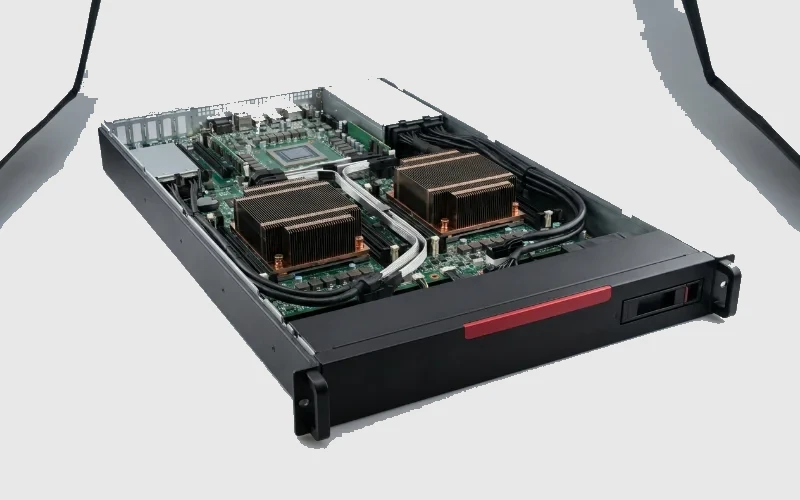
RDP GPU Mart builds the on-prem GPU servers Indian BFSI needs for real-time fraud and risk — India-manufactured, INR-transparent, and architected for RBI localization, DPDP, and PCI-DSS so financial data never leaves Indian soil. *(Explore RDP's BFSI AI infrastructure or request a quote at RDP GPU Mart.)*
FAQ
Why do Indian banks run AI on-prem? RBI data-localization, DPDP, and PCI-DSS require financial data to stay on Indian soil, and sub-millisecond fraud inference needs local GPUs.
What is the RBI FREE-AI framework? An August 2025 RBI framework requiring financial-sector AI to be responsible, explainable, fair, and auditable (1Point1, 2026).
How fast must fraud detection be? Sub-millisecond inference on live UPI/NEFT/RTGS/card flows — decisions occur inside the payment path.
How big is the fraud problem in India? Reported frauds reached ₹48,021 crore in FY26, up 46.4% year-on-year, with deepfakes now threatening live KYC.
—
Related
- Sovereign AI in India: Building In-Country GPU Infrastructure
- Government & PSU AI: Data-Residency-First GPU Infrastructure
- GPU Sizing for Agentic AI Workloads
Research log (Rule #1)
1. RDP (2026) — AI for BFSI India, fraud detection (RBI localization, DPDP, PCI-DSS). https://www.rdp.in/dc/ai-bfsi 2. 1Point1 (2026) — BFSI AI + human-in-the-loop; RBI FREE-AI, FRI mandate. https://www.1point1.com/blogs/why-bfsi-must-combine-ai-and-human-in-the-loop-to-prevent-modern-fraud 3. Business Standard (2026) — deepfake fraud threat in India. https://www.business-standard.com/technology/tech-news/low-cost-ai-models-are-fuelling-india-s-growing-deepfake-fraud-threat-126061700977_1.html 4. Chambers & Partners — framework for AI in the Indian financial sector. https://chambers.com/articles/a-framework-for-using-ai-in-the-indian-financial-sector 5. Cyber Defense Magazine — AI-powered cyberattacks and BFSI. https://www.cyberdefensemagazine.com/the-rise-of-ai-powered-cyberattacks-is-bfsi-ready/
Ready to deploy?
Talk to an RDP architect about power, cooling and lead time.