



India’s demographic dividend is a 10-crore-students problem, not a 1-crore-students problem. The real work is making 10,000 institutions AI-ready within five years. Here is what that actually takes — and why no single stakeholder can do it alone.
The Scale of the Opportunity
India educates 10 crore students across roughly 15 lakh schools, 1,100 universities, 14,000 industrial training institutes, and 10,000 engineering and polytechnic colleges. Within this ecosystem, fewer than 5 percent of institutions have even basic computational infrastructure aligned with artificial intelligence pedagogy. This gap is not a technology problem; it is a structural readiness problem that spans hardware, teacher capacity, curriculum design, and power infrastructure.
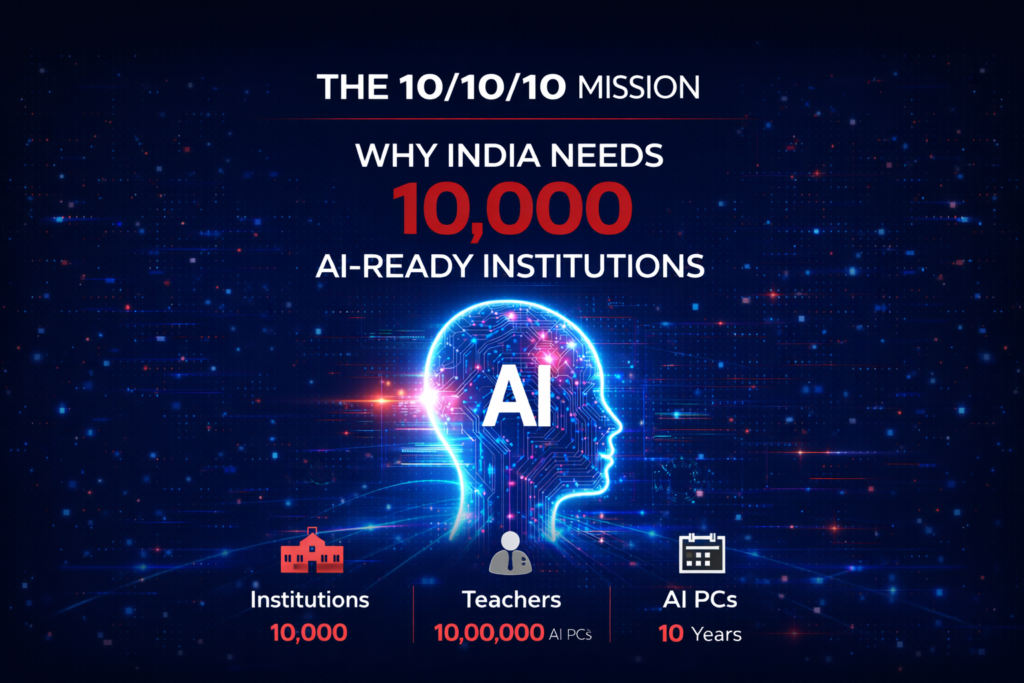
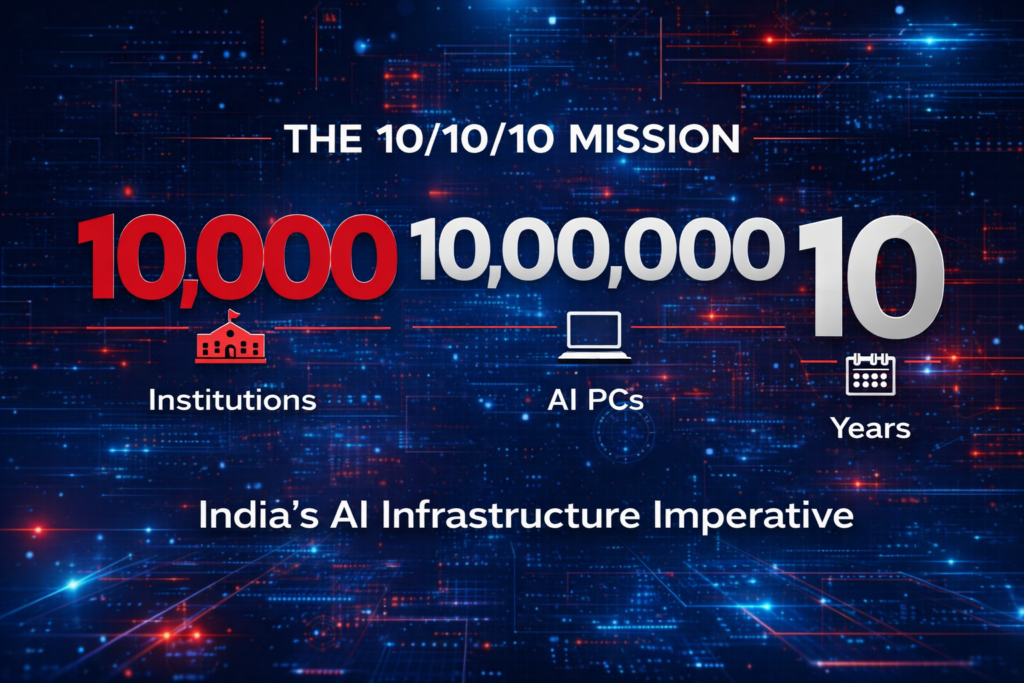
The AI VIDYA 10/10/10 Mission sets a clear target: 10,000 AI-ready institutions, 10 lakh AI personal computers deployed, serving 10 crore students by 2030. This is not an aspirational slogan. It is the minimum viable scale required for India to convert its demographic dividend into an artificial intelligence-ready workforce. Countries that execute this transition—South Korea did it with digital infrastructure in the 1990s, Vietnam is attempting it now—move their talent density upward by a full standard deviation within a decade. India cannot wait.
What “AI-Ready” Actually Means
An AI-ready institution is not one that has purchased laptops or downloaded a curriculum framework from the Ministry of Education. It is a school, college, or training centre that can teach foundational machine learning, data science, and AI systems thinking to students in grades 8 through 12 and across diploma and bachelor programmes. This requires five simultaneous conditions: modern computing hardware capable of running inference and light training workloads; teachers trained not just in content but in pedagogical approaches to AI; curriculum materials aligned with the National Education Policy 2020 and accreditation bodies like AICTE and CBSE; reliable electrical supply with backup systems; and last-mile internet connectivity with bandwidth sufficient for collaborative learning.
Most Indian institutions fail on at least three of these fronts simultaneously. The median secondary school has no electricity backup. Teacher training in AI remains concentrated in perhaps 200 of the 1,100 universities. Curriculum materials exist but are not integrated into institutional planning. And hardware procurement has historically favoured imported systems at price points ($1,200 per unit) that make classroom deployment impractical. A school with 500 students cannot justify 50 machines at $60,000 total when its annual IT budget is $8,000.
The Hardware-First Constraint
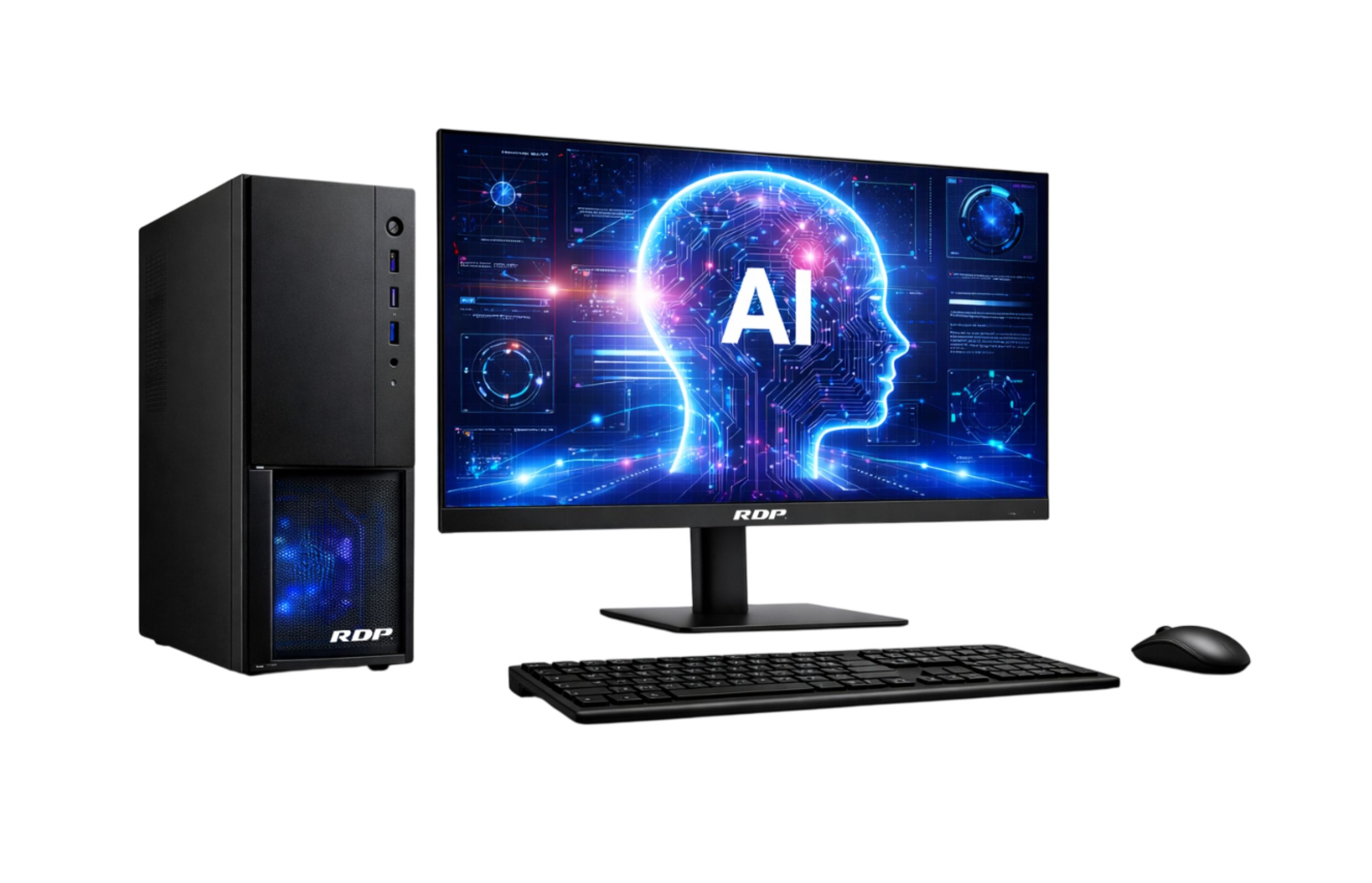
AI readiness begins with devices that are designed for India’s cost structure and use cases. The AI PC—a machine optimized for running small language models, computer vision tasks, and ML workloads locally, without dependency on cloud inference—is the enabling technology for distributed AI education. An AI PC built for the Indian education market costs $400 to $600 per unit, runs a full Linux or Windows environment, supports offline functionality, and can operate on electrical grids with voltage fluctuations and power cuts.
Indigenous original equipment manufacturers like RDP Technologies have the design flexibility and cost discipline to build these systems; multinational vendors do not. A global OEM’s unit economics break at volumes below 50,000 machines per year in a market like India. The 10/10/10 Mission requires deploying 10 lakh (1 million) units. This scale is unachievable without partnerships with Indian hardware manufacturers who can absorb the R&D cost across industrial, education, and enterprise segments. The case for Made in India IT hardware is deepening across sectors. In education, it becomes categorical: no AI-ready institution at scale without indigenous hardware supply.
Teacher Capacity as the Binding Constraint
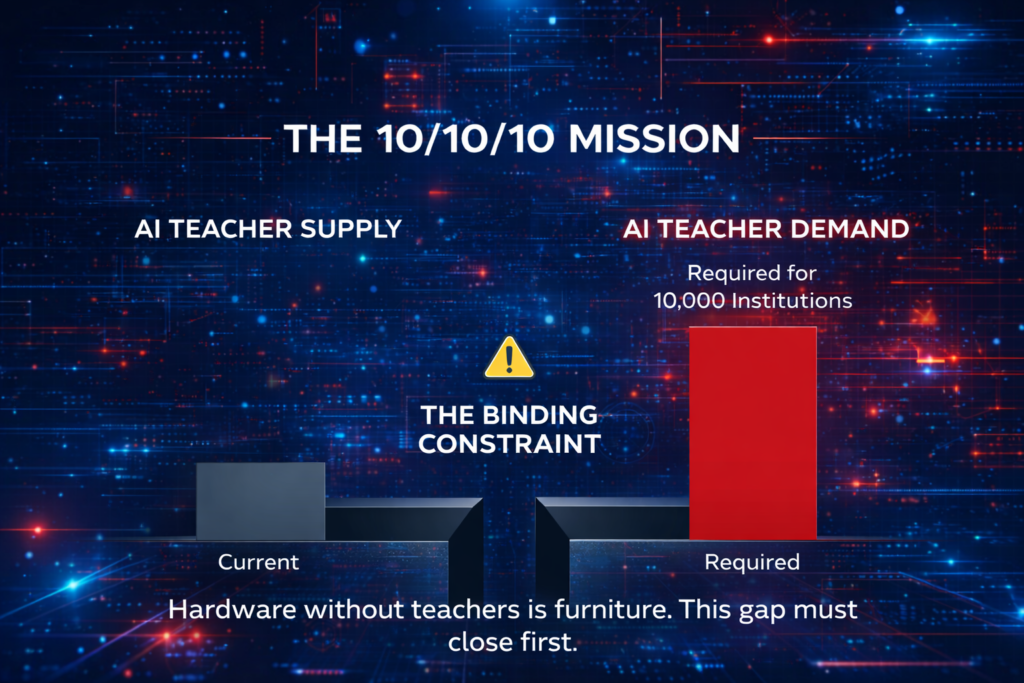
The shortage of AI-literate teachers is the true blocker. India has 70 lakh school teachers and 2.5 lakh college faculty. Of these, fewer than 5,000 have structured training in applied AI, machine learning pedagogy, or data science fundamentals. Training 50,000 teachers to teach AI across 10,000 institutions requires a three-year, systematic programme that combines online learning, peer mentoring, and in-school practicum. This cannot be crowdsourced or outsourced to online platforms. It requires institutional partnerships between teacher training centres, state education departments, and technology partners.
RDP’s AI VIDYA programme embeds teacher training as a core component, not an afterthought. When an institution becomes AI-ready, its teachers participate in a structured 120-hour certification programme focused on AI fundamentals, classroom delivery, assessment design, and troubleshooting. This is expensive—roughly $500 per teacher, per institution. But it is non-negotiable. Hardware without trained teachers is just an expensive storage device.
Curriculum Integration and Regulatory Alignment
India’s education system is highly centralized and regulated. The National Education Policy 2020 creates the policy mandate for AI education, but translation into actionable curriculum is still incomplete. AICTE (All India Council for Technical Education) and CBSE (Central Board of Secondary Education) have published frameworks, yet implementation varies wildly by institution. Some state boards have integrated AI into mathematics and computer science. Others have not touched it.
AI-ready institutions must navigate this regulatory complexity. They need curriculum materials that align with NEP 2020 and accreditation requirements, while remaining flexible enough to adapt to state-level variations. This is not a content licensing problem; it is a co-design problem that requires ongoing dialogue with regulatory bodies and peer institutions. Partnerships that succeed do this through peer networks and state-level coordination, not through vendor-led initiatives. RDP’s approach partners with institutions, not around them.
Infrastructure: Electricity and Connectivity
The prosaic becomes critical at scale. Ten lakh AI PCs deployed across Indian institutions are worthless if half sit unpowered three hours per week due to grid instability, or if the institution’s internet bandwidth is 2 Mbps shared across 500 users. AI-ready infrastructure must include backup power systems, local caching of learning materials, and Wi-Fi 6 mesh networks designed for high-density classroom use.
Many institutions lack any form of backup power. Others have 10-year-old solar installations that no longer meet capacity. Connectivity problems are acute in Tier 2 and Tier 3 cities and rural areas where demographic growth is highest. This infrastructure burden falls partly on institutions, partly on state governments, and partly on technology partners. Solving it requires acknowledging that AI readiness is ultimately an infrastructure readiness problem. The 10/10/10 Mission succeeds or fails not on pedagogy but on whether the power stays on and the network stays up.
The Partnership Model: Why No Single Stakeholder Can Act Alone
This is where the 10/10/10 Mission diverges from historical technology adoption patterns in Indian education. Historically, the adoption chain ran: vendor → administrator → teacher → student. The vendor set terms; the institution adapted.
AI readiness is too complex and too institution-specific for this model to work. A 2,000-student engineering college in Pune has different infrastructure, teacher capacity, and regulatory requirements than a 500-student secondary school in Madhya Pradesh. A government ITI has a different strategic horizon than a private school chain. No single organization—vendor, educator, government body, or NGO—has sufficient leverage or knowledge to execute the transition across 10,000 institutions.
The partnership model that works here is a four-way alliance: state education departments or school chains (institutional access and local context), technology partners (hardware, software, design infrastructure), teacher training organizations (capacity building), and student communities (adoption and feedback). Each stakeholder brings a non-fungible resource. Government departments bring regulatory authority and institutional relationships. Technology partners bring design discipline and unit economics. Teacher trainers bring pedagogical expertise. Students and educators bring use-case clarity. The most mature implementations of this partnership model globally emerge when CIOs and educators work together to define the problem first, then source the solution.
For investors and policy makers, the implication is clear: the 10/10/10 Mission is the largest structural TAM in Indian education technology hardware. No single global OEM can execute it at India’s price points or regulatory complexity. But an alliance of Indian institutions, educators, and manufacturers can. This is why AI VIDYA exists.
The Five-Year Window
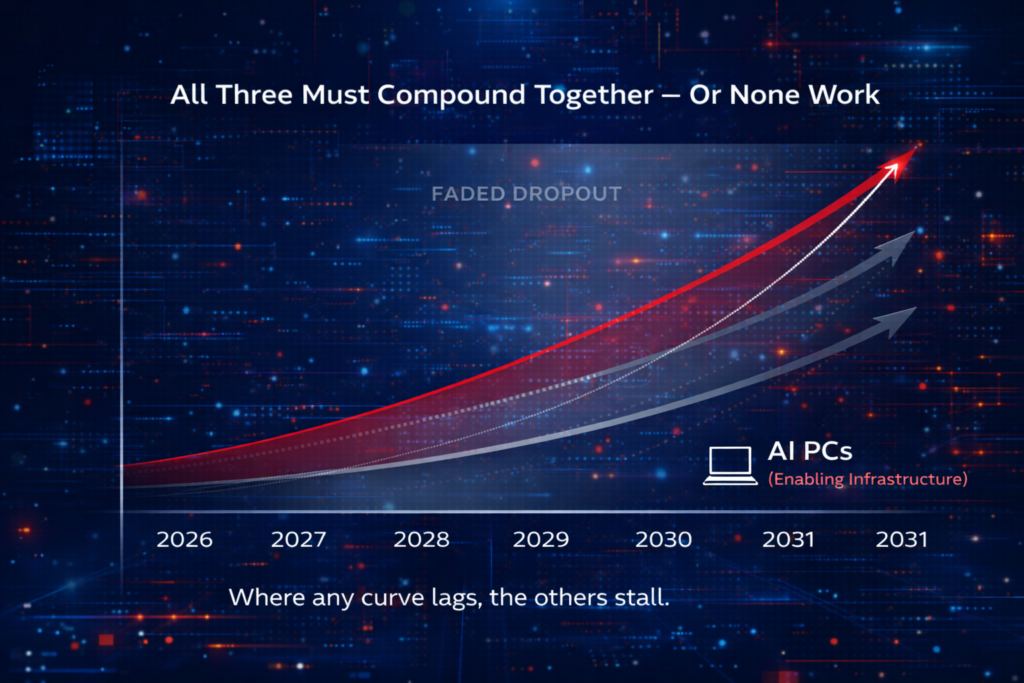
India’s demographic window is tight. The 10-crore students currently in the pipeline will graduate or train out by 2030. If AI readiness reaches 10,000 institutions by then, India will have a generation of workers with foundational AI literacy. If it does not, the demographic dividend becomes a missed opportunity. The infrastructure, the teachers, and the hardware must align within 36 months to allow two years of classroom maturation before students transition into the workforce.
This is not a technology adoption cycle. This is a generational bet. It requires regulatory clarity, sustained funding commitment, and partnership discipline over five years. The 10/10/10 Mission is India’s wager that this is possible.
Table: AI-Ready Institution Tiers — School vs ITI vs University
| Parameter | AI-Ready School (Class 6–12) | AI-Ready ITI / Polytechnic | AI-Ready University / Engineering College |
|---|---|---|---|
| Compute per Student | Shared: 1 PC per 2 students in lab; NPU-enabled | 1 PC per student; GPU workstation for advanced batches | 1 AI PC per student + access to shared GPU cluster |
| Lab Configuration | 30-seat lab, 1 edge server, 100 Mbps uplink | 30-seat lab, 2–4 GPU workstations, local inference server | 60-seat lab + GPU cluster (8–16 GPUs) + MLOps platform |
| Teacher : Student Ratio (AI lab) | 1:30 (with AI teaching assistant tools) | 1:20 | 1:15 (lab); 1:40 (lecture) |
| Annual Budget (lab + curriculum) | ₹5–12 lakh | ₹15–35 lakh | ₹60 lakh–2 cr |
| Curriculum Alignment | NEP 2020 AI module, CBSE AI elective (Class 9–12) | NCVET AI trade syllabus, AICTE short-term certification | AICTE model curriculum, UGC guidelines, industry electives |
| Industry Linkage | Optional — company visits, guest sessions | Mandatory apprenticeship component under NAPS | Mandatory internship + research collaboration expected |
RDP Technologies Limited designs, manufactures, and supports IT hardware in India — desktops, thin clients, mini PCs, AI PCs, workstations, servers, and rack-scale AI infrastructure. 14 years. 100,000+ devices shipped. Over 1 million end users. 28,000 sq. ft. facility in Hyderabad. ISO 9001, PLI 2.0, MeitY and BIS registered.
Make in India. Built for an AI-Ready India. Reliability is Our Product.
If you are evaluating IT hardware for your organisation — speak with our team. No sales pitch, just an honest fit review.
