



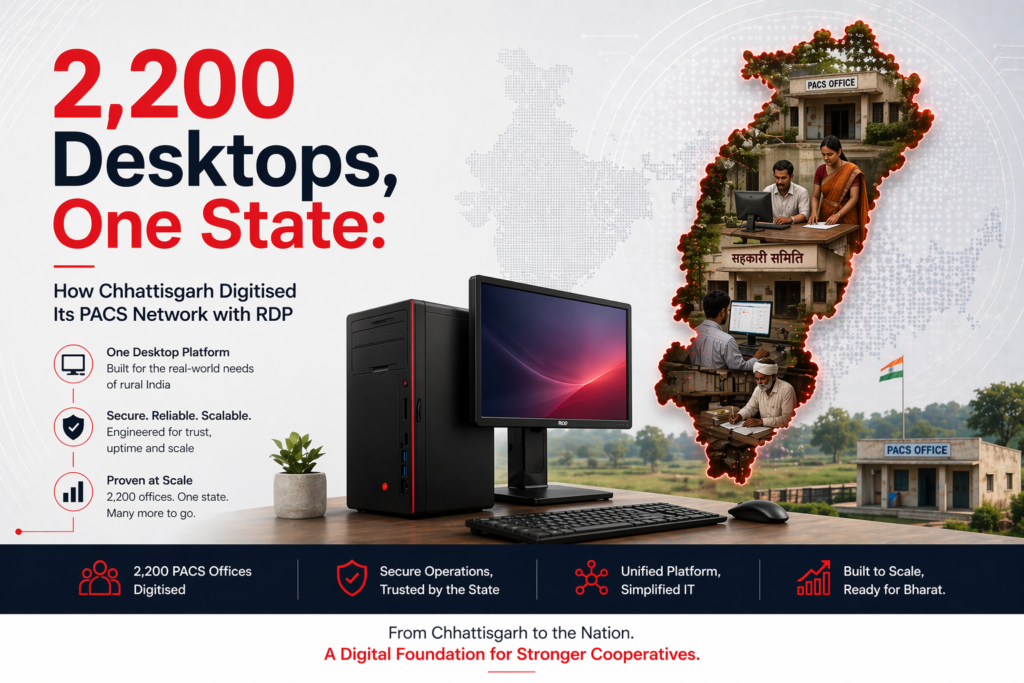
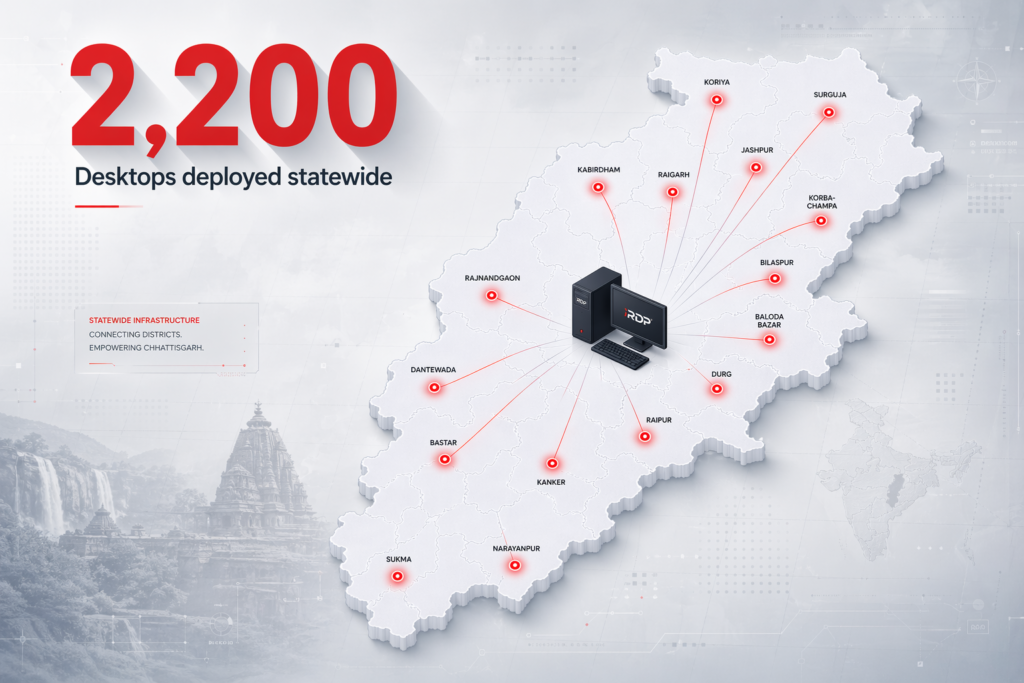
Two thousand two hundred desktops. One state. Every gram panchayat, every tehsil, every district cooperative office — connected to a single, standardised IT platform for the first time. That is not a procurement order. That is a state rewiring its rural governance backbone.
The Government of Chhattisgarh chose RDP to make it happen. Here is how — and more importantly, why.
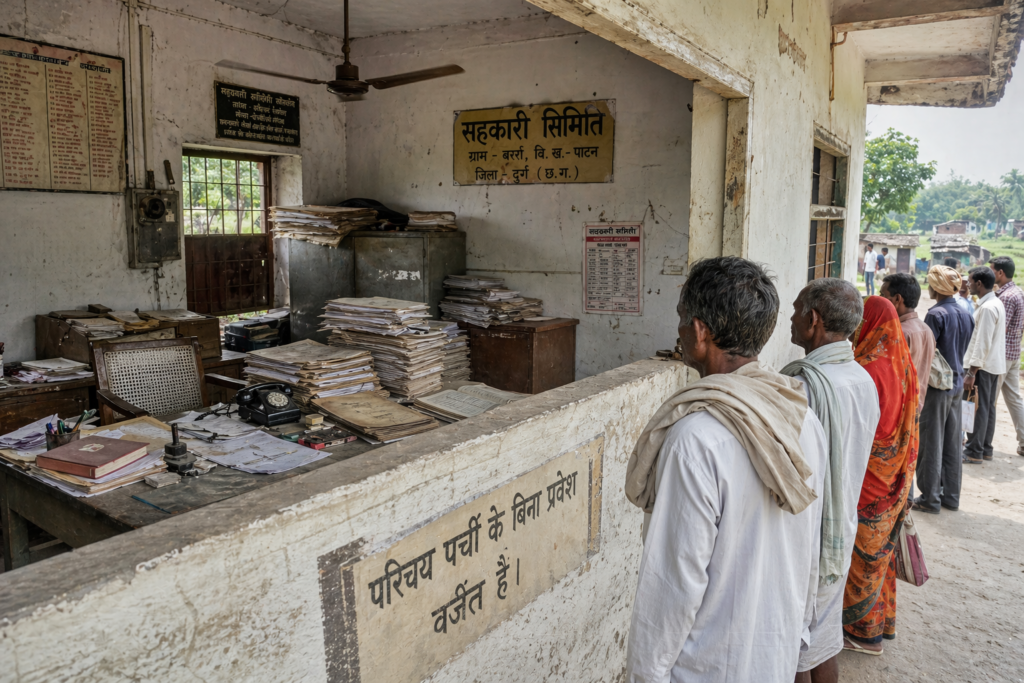
The Problem: A State Running on Paper and Patchwork
Chhattisgarh’s Primary Agricultural Credit Societies (PACS) are the financial first-responders of rural India. They process crop loans, manage cooperative deposits, verify Aadhaar identities, and administer welfare schemes for millions of farmers and rural families. The state has hundreds of PACS offices spread across some of India’s most remote districts — from the plains of Durg to the forests of Bastar.
Before this deployment, most of these offices ran on a patchwork of ageing hardware, borrowed machines, and in some cases, no computers at all. Five challenges made the status quo untenable:
- No standardised digital infrastructure. Each office had different hardware (or none), making centralised software rollouts impossible.
- Manual, fragmented workflows. Citizen service delivery depended on paper registers and physical verification — slow, error-prone, and opaque.
- Unreliable hardware in remote locations. Global OEM service networks thin out fast beyond state capitals. A machine failure in a rural tehsil meant weeks of downtime.
- Growing e-governance demand. State and central government portals — cooperative banking, Aadhaar authentication, DBT (Direct Benefit Transfer) — require always-on, connected endpoints.
- No uniform platform for future expansion. Without a single hardware standard, every software upgrade became a compatibility project.
The state needed an OEM that could deliver volume, guarantee reliability across rural geographies, and provide warranty coverage where others do not reach.
Why RDP Won the Mandate
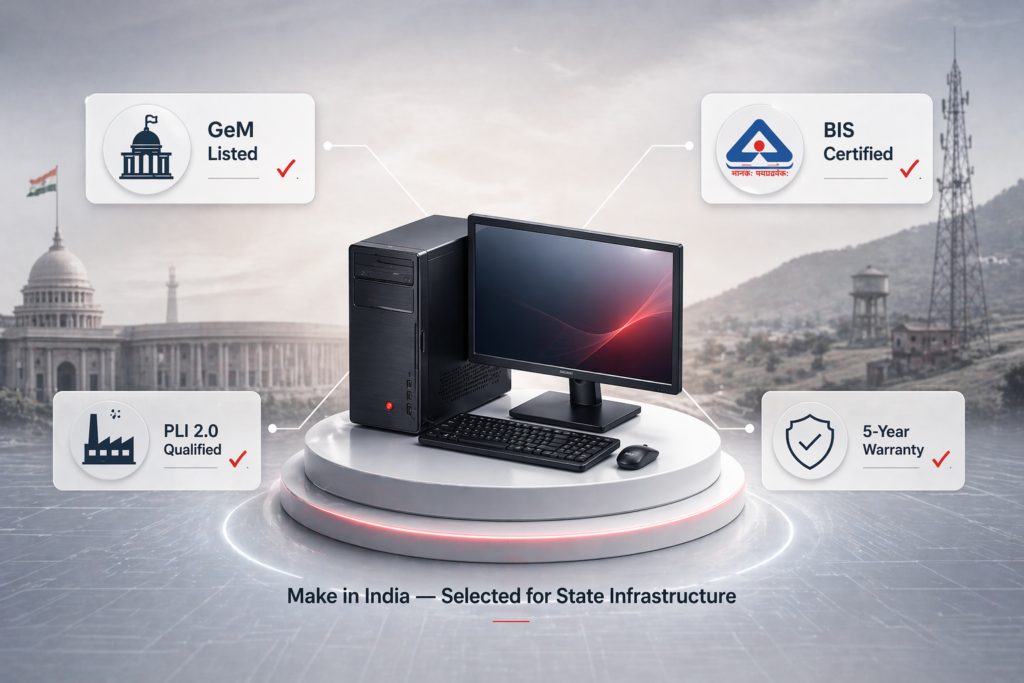
When a state government evaluates 2,200 desktops for rural deployment, the shortlist shrinks fast. The vendor must be a Make in India OEM listed on the Government e-Marketplace (GeM), with BIS certification, a credible manufacturing base, and a service network that extends beyond Tier 1 cities.
RDP met every requirement — and brought structural advantages that global OEMs could not match at this price point and geography:
- GeM-listed, BIS-certified, PLI 2.0 compliant. No procurement friction.
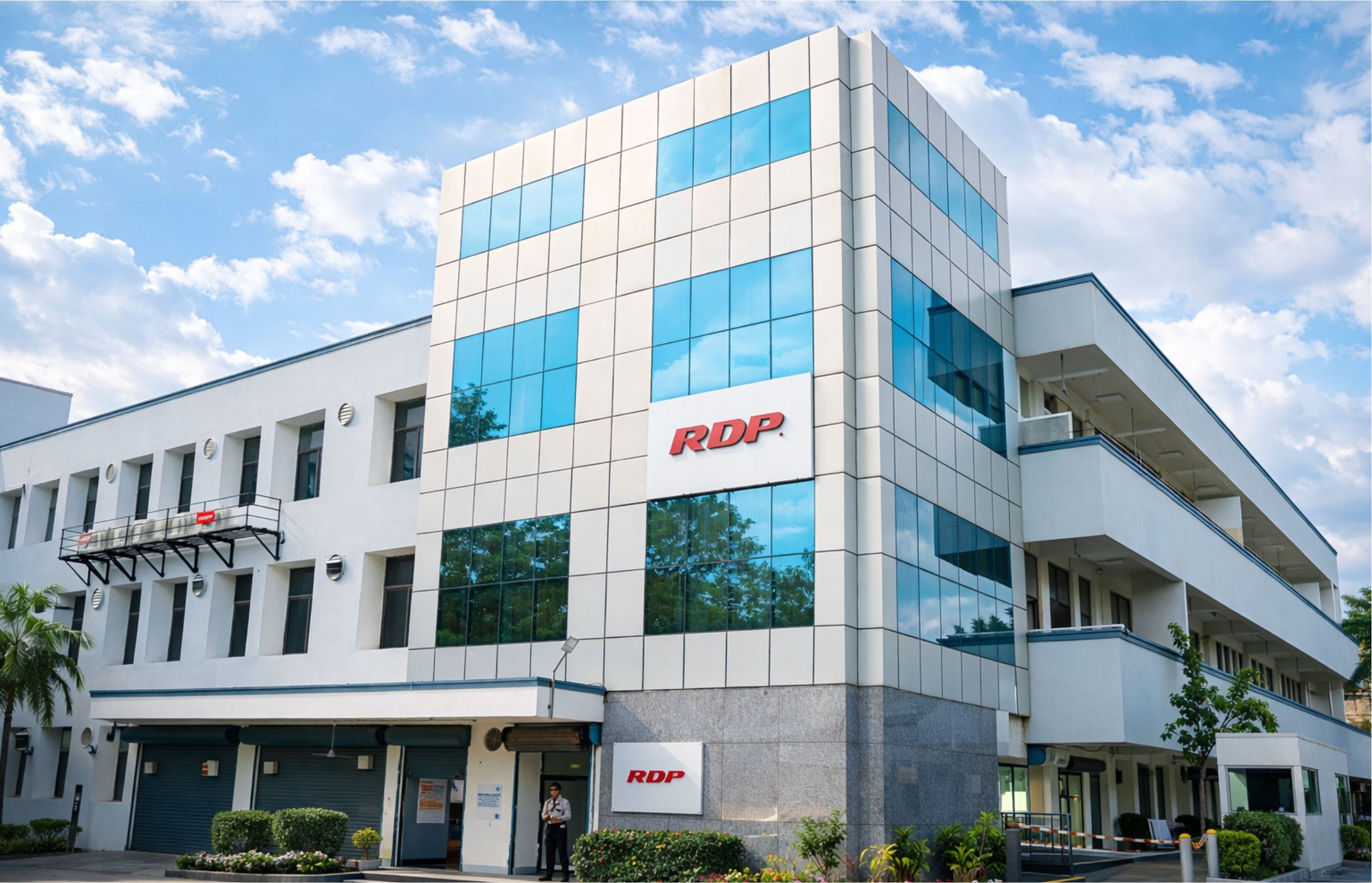
- 28,000 sqft Hyderabad manufacturing facility. ISO 9001 certified. Full control over assembly, quality, and lead times.
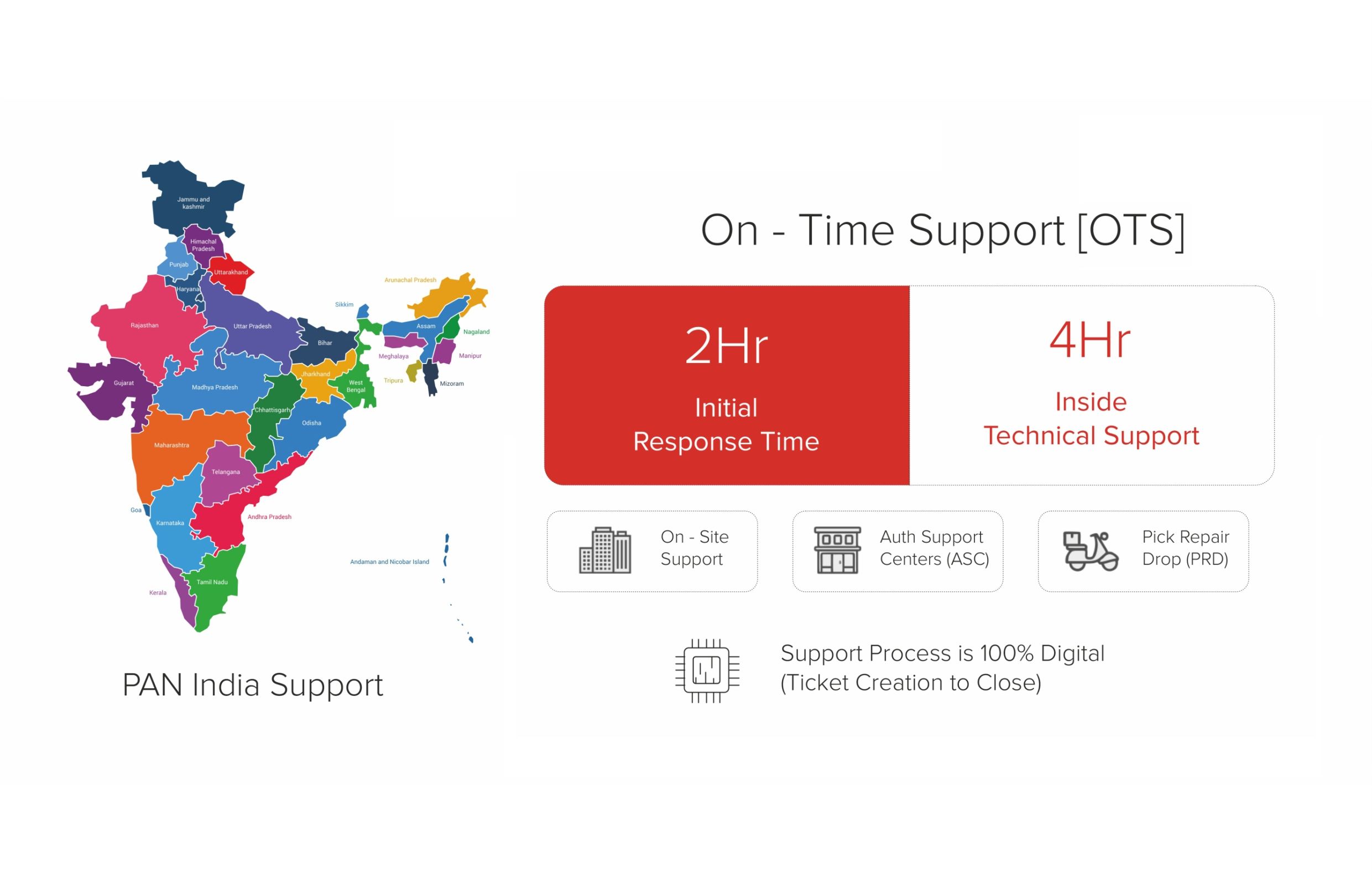
- 5-year warranty with pan-India service. Not a three-year base with an expensive extended option — five years, standard, covering rural locations.
- India-first pricing. Lifecycle cost engineered for government budgets, not multinational margin structures.
This is what state digital mission planners look for in a hardware partner — not just a product, but an infrastructure relationship.
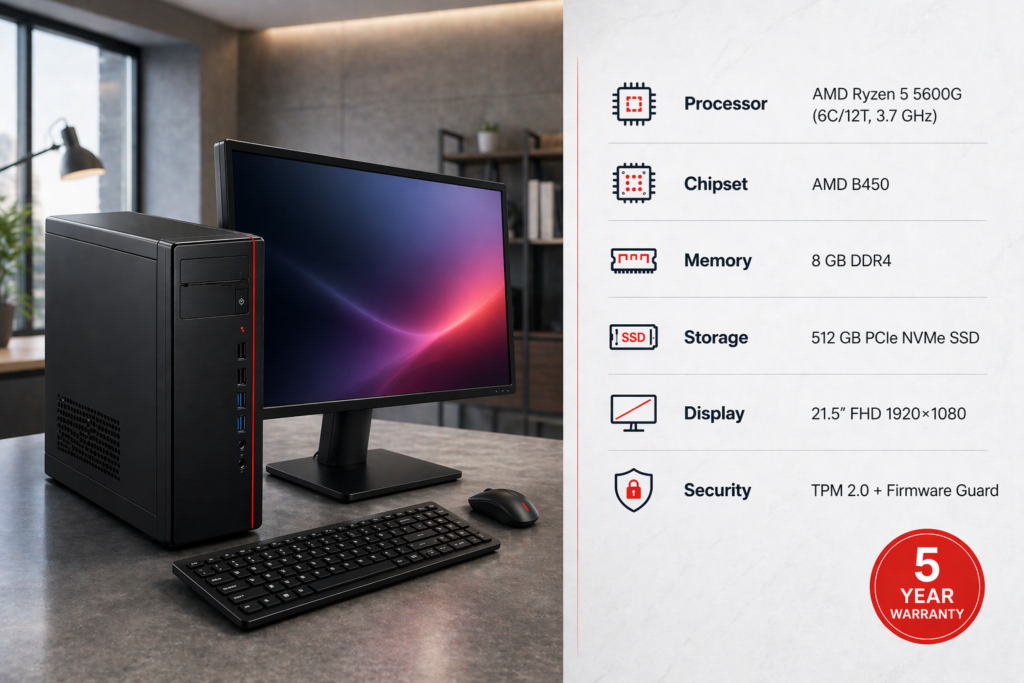
The Hardware: RDP Desk PC 125
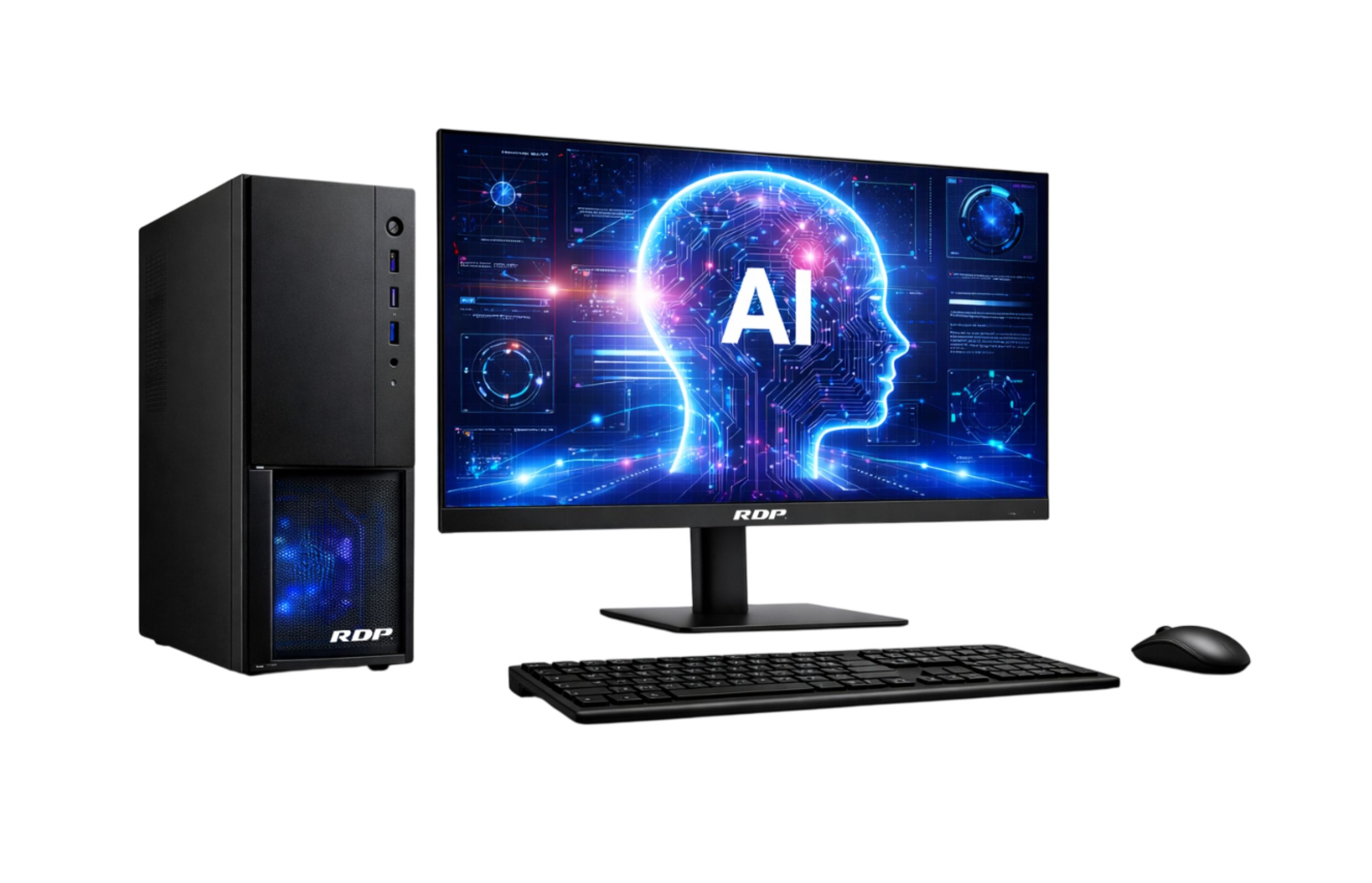
The Desk PC 125 was purpose-built for the workloads that define government and cooperative office computing. It is not over-specified for web browsing; it is right-specified for the mix of portal operations, Aadhaar biometric workflows, database access, and office productivity that PACS offices run daily.
| Component | Specification |
|---|---|
| Processor | AMD Ryzen 5 5600G — 6 cores, 3.7 GHz base clock |
| Chipset | AMD B450 |
| Memory | 8 GB DDR4 RAM |
| Storage | 512 GB PCIe NVMe SSD |
| Display | 21.5″ FHD (1920×1080) monitor |
| Security | TPM 2.0, firmware-level security |
| Operating system | Windows 11 Professional 64-bit |
| Warranty | 5 years |
The Ryzen 5 5600G is the quiet workhorse here. Six cores and integrated Radeon graphics handle multi-tab portal workflows, Aadhaar authentication, and document management without breaking a sweat — and without requiring a discrete GPU, which keeps the thermal envelope and failure surface small. For rural deployments where air conditioning is inconsistent, that matters.
The 512 GB NVMe SSD ensures boot times and application launches stay fast even as local caches and records accumulate. And TPM 2.0 provides the hardware root of trust that state IT policies increasingly mandate for citizen-data-handling endpoints.
Explore the full RDP desktop lineup for specifications across Essential, Business, and Performance tiers.
What 2,200 Machines Actually Do Every Day
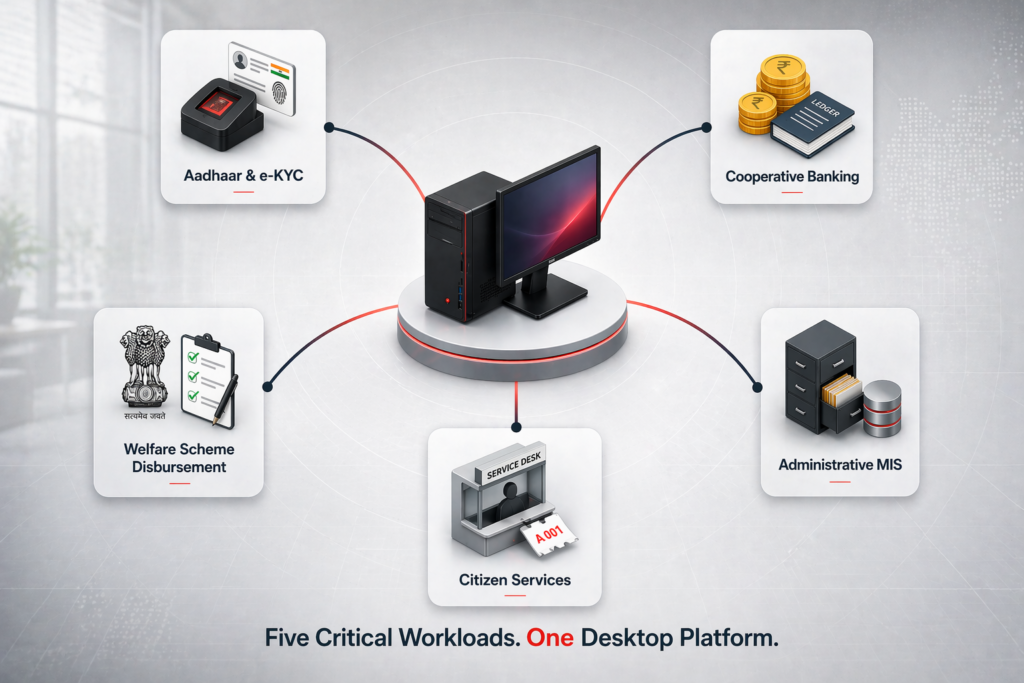
This is not a desktop deployment. It is a service-delivery platform. Across Chhattisgarh’s PACS and rural administrative offices, the RDP Desk PC 125 systems now power five critical workloads:
- Cooperative portal operations. PACS staff process crop loans, manage cooperative accounts, and run financial transactions through state cooperative banking portals.
- Aadhaar and e-Aadhaar services. Citizen identity verification, biometric authentication, and Aadhaar update workflows — all requiring responsive, TPM-secured endpoints.
- Government welfare scheme management. Beneficiary registration, eligibility verification, and DBT processing for central and state schemes.
- Rural administrative functions. Record management, MIS reporting, inter-office communication, and office productivity.
- Digital citizen service delivery. Public-facing operations — farmers and rural residents walk into a PACS office and interact with government portals through these machines.
When a farmer in Dhamtari district walks into a PACS office to check a loan status or update an Aadhaar record, the machine on the other side of the counter is an RDP Desk PC 125. That is what scale means.
The Numbers That Matter
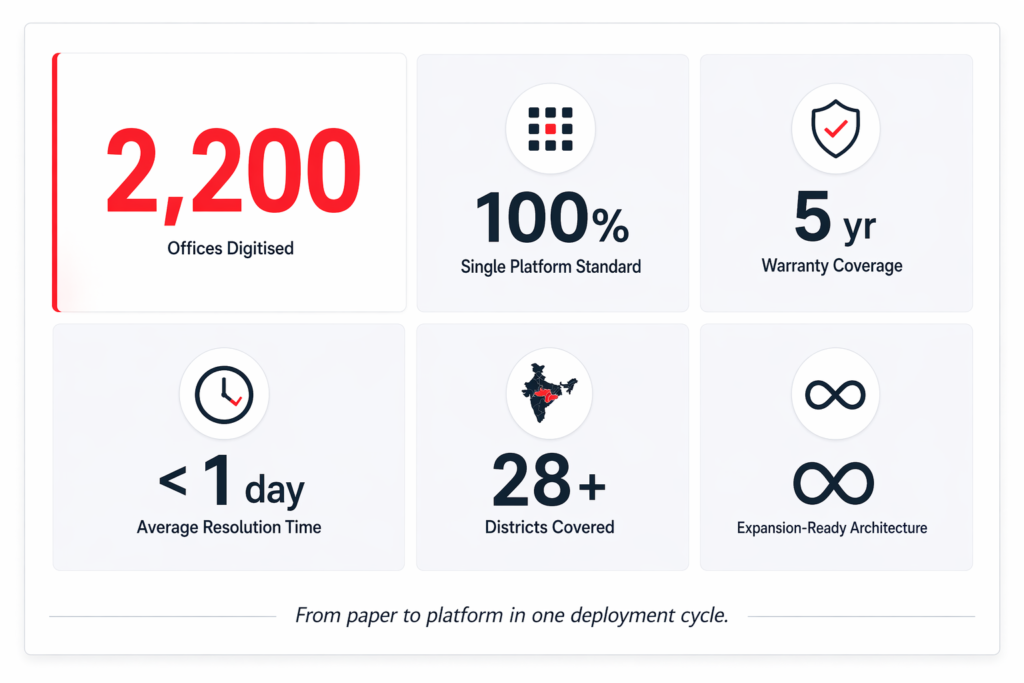
| Outcome | Impact |
|---|---|
| Offices digitised | 2,200 PACS and government locations statewide |
| Service delivery | Faster turnaround for rural Aadhaar, DBT, and cooperative transactions |
| IT standardisation | Single hardware platform, single OS image, single warranty umbrella |
| Uptime reliability | Stable performance in distributed rural deployments with 5-year coverage |
| Productivity | Accelerated cooperative and administrative workflows across every office |
| Future-readiness | Platform ready for additional software, workload growth, and central mandates |
The strategic signal is equally important. Chhattisgarh now has a replicable template: one OEM, one SKU, one support contract, statewide. Other states evaluating similar digital mission hardware deployments can look at this as a proof point — not a pilot, but a full-scale production deployment.
Why This Deployment Matters Beyond Chhattisgarh
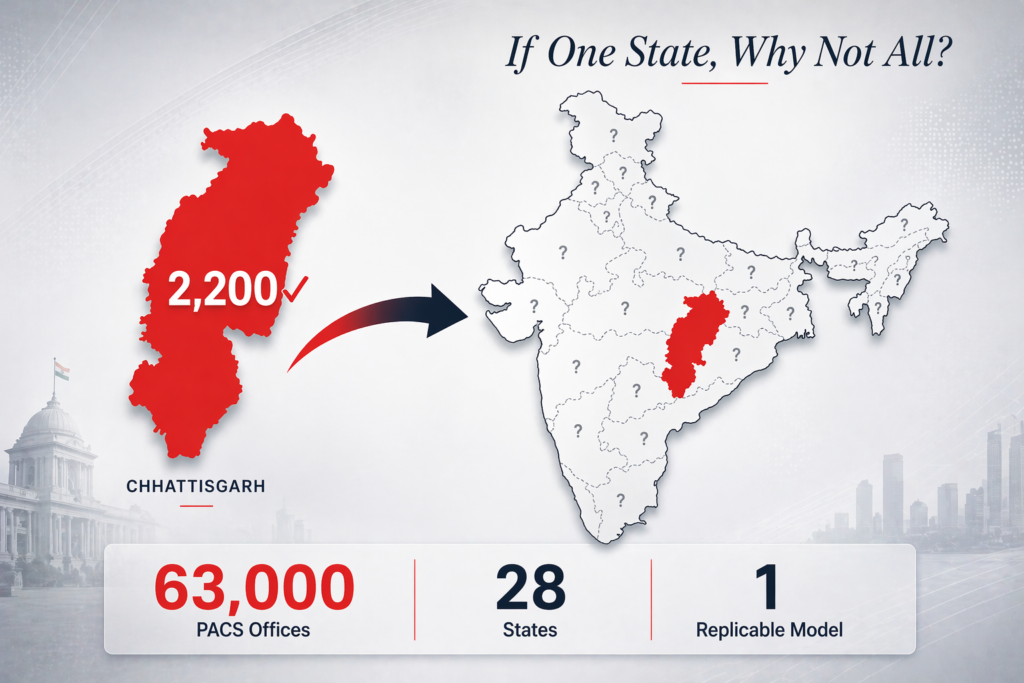
India has over 63,000 PACS across 28 states. The central government’s plan to computerise all of them is one of the largest rural IT infrastructure programmes in the world. Chhattisgarh is among the first states to execute at this scale with a single Make in India OEM.
For RDP, this deployment validates three things investors and government buyers care about:
- Distribution depth. RDP can deliver and service hardware in gram panchayats, not just metros. That is a moat no import-dependent competitor replicates easily.
- Government trust at scale. A 2,200-unit order from a state government is a statement of confidence — in the product, the pricing, and the service commitment.
- Repeatable playbook. What works in Chhattisgarh works in Madhya Pradesh, Odisha, Rajasthan, and every state with a PACS digitisation mandate.
Compare this with how Mumbai’s transport authority deployed 4,000+ RDP Mini PCs across its local bus fleet. The pattern is consistent: when Indian institutions need IT at scale in difficult geographies, they choose RDP.
Make in India. Built for an AI-Ready India. Reliability is Our Product.
Planning a state-level or large-scale government desktop deployment? Talk to RDP.